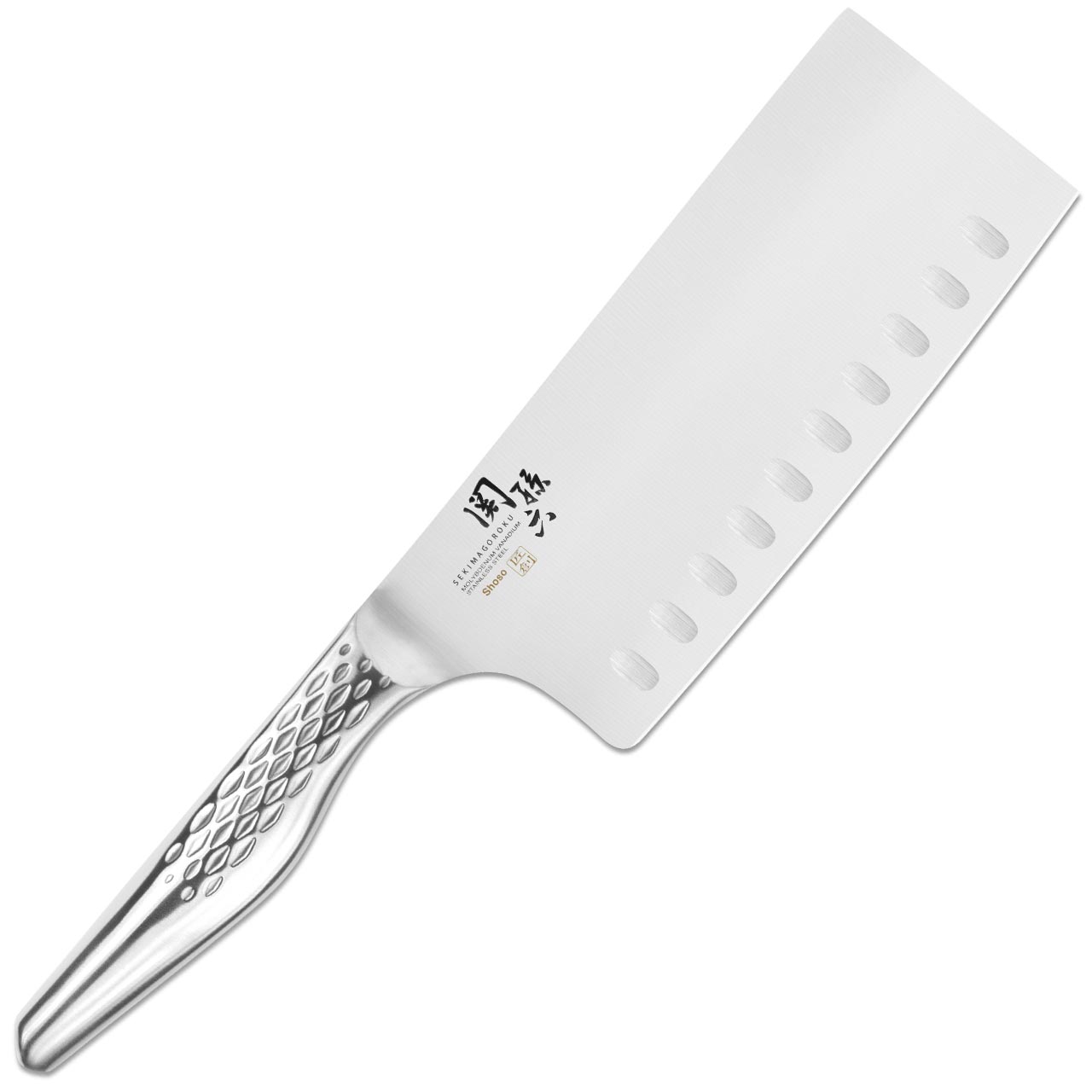
KAI Seki Magoroku Shoso Chef's Knife – Superior Japanese Precision for the Western Market
KAI is one of the most renowned Japanese brands specializing in blade craftsmanship, having gained immense popularity in the West due to its outstanding quality and timeless design. Among its masterpieces, KAI Seki Magoroku Shoso stands out—a chef’s knife that promises to elevate your culinary skills to a whole new level.
Designed for both professional chefs and cooking enthusiasts, this knife features an impressive silver-colored blade made from high-quality 1K6 steel. Its smooth edge guarantees precise and clean cuts every time, enabling effortless slicing of various ingredients.
The 30 cm knife boasts a 16.5 cm blade, carefully honed to a hardness of 58 HRC, ensuring exceptional durability and long-lasting sharpness. With a blade thickness of only 1 mm and a height of 7 cm, this model offers the perfect balance between stability and agility.
The 13 cm stainless steel handle is crafted with meticulous attention to detail, ensuring a comfortable and secure grip. Its ergonomic design allows prolonged use without causing fatigue, making it a pleasure to handle even during extended cooking sessions.
Inspired by traditional Japanese blade-making craftsmanship, KAI Seki Magoroku Shoso originates from a renowned Japanese forge. Its authentic Asian-style blade has a 16° sharpening angle, delivering unmatched precision and sharpness.
In short, KAI Seki Magoroku Shoso seamlessly blends timeless Japanese artistry with modern design, offering an exceptional tool for culinary excellence. Whether slicing, dicing, or chopping, this knife is sure to become your favorite kitchen companion.
Care and Maintenance of Japanese Knives
✅ Proper Knife Care
Always hand wash the knife with warm water and dry it immediately with a soft cloth to maintain sharpness and quality.
To keep the edge precise, water stones are recommended for sharpening, while ceramic honing rods help refine the blade during regular use.
Store the knife in a safe place, avoiding contact with other kitchen utensils that could damage the edge.
Use wooden, plastic, or rubber cutting boards to protect the blade and extend its lifespan.
⚠️ Special Note for Traditional Japanese Steels
Japanese knives made from high-carbon steel require extra care to prevent oxidation and rust.
After each use, thoroughly clean the blade with warm water and immediately dry it completely with a soft cloth.
Applying a thin layer of mineral or camellia oil occasionally can further protect the blade from corrosion.
Knives should be stored in a dry place, avoiding prolonged exposure to moisture or contact with aggressive cleaning agents.
? Improper Use
Do not cut on hard surfaces like glass, ceramics, steel, metal tables, or baking trays.
Avoid cutting bones or frozen ingredients, as this can damage the blade edge.
Do not wash the knife in a dishwasher—chemicals and high temperatures can negatively impact the blade and handle.
A Japanese knife is a precision tool, designed for specific culinary tasks. Do not use it for inappropriate activities like chopping bones, opening cans, or handling non-food materials.
Send request