Tamahagane Sujihiki – Precision and Elegance in Every Cut
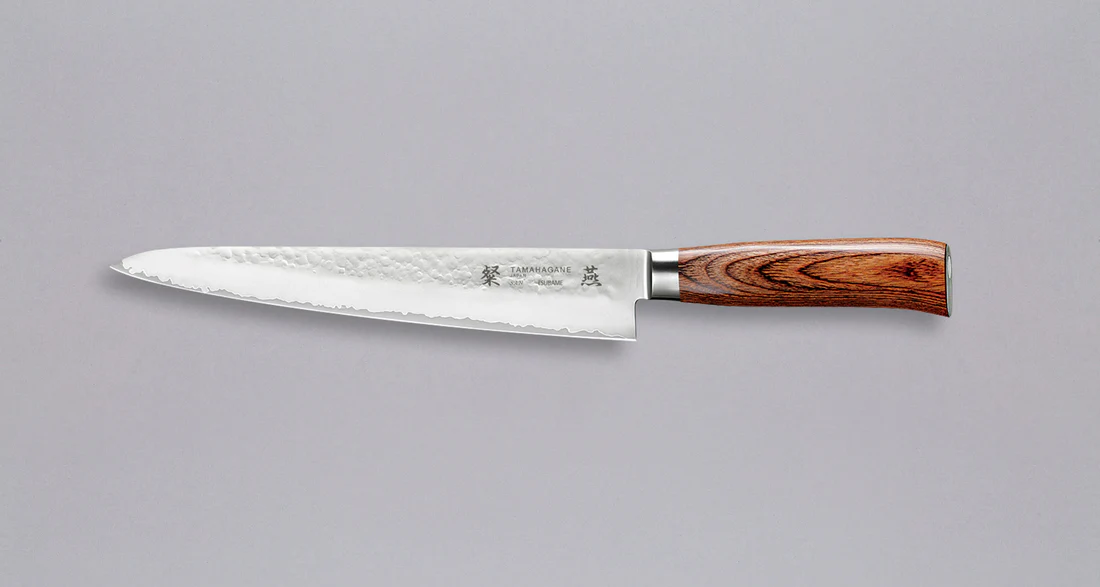
The Tamahagane Sujihiki knife is designed for precise slicing of meat, fish, and delicate ingredients, ensuring effortless, razor-sharp cuts. With its 240 mm length, this knife is highly efficient for filleting, portioning, and cutting thin slices, making it an essential tool in both professional kitchens and home cooking.
Its long, slender blade allows maximum control, reducing friction during slicing and ensuring perfectly smooth cuts.
Blade Shape – Sujihiki, The Master of Precision Cutting
Sujihiki is the Japanese equivalent of Western slicers, yet improved with professional-grade refinements. Its thin and elongated blade offers unparalleled precision, making it perfect for:
✅ Effortlessly slicing meat and fish without tearing fibers
✅ Precise portioning of proteins with minimal resistance
✅ Smooth and controlled slicing with long, fluid motions
✅ Effective filleting while preventing food from sticking to the blade
Due to its optimized design, Sujihiki is a favorite among chefs who demand flawless cuts without excessive pressure.
Steel – VG-5, Ideal Balance of Sharpness and Longevity
The blade is made from VG-5 steel, a member of Japan's V-Gold premium steel family. This material provides long-lasting sharpness, exceptional corrosion resistance, and easy sharpening, ensuring a perfect edge.
Advantages of VG-5 steel:
✅ High hardness and durability
✅ Effortless sharpening and maintenance
✅ Resistance to moisture and corrosion
✅ Incredible cutting precision
Lamination – Flexibility and Core Protection
The VG-5 steel core is laminated with two outer layers of stainless steel SUS410, hardened to 28–32 HRC, ensuring optimal flexibility and added protection.
This laminated structure results in an ultra-thin blade, minimizing friction while slicing, allowing seamless, effortless cuts with minimal resistance.
Finish – Subtle Elegance of Matte Texture
The outer layers feature a refined matte finish, complemented by delicate hammer marks, adding a distinctive visual appeal to the knife. The Hagane and Jigane separation line, which distinguishes the hard and soft steel layers, is visible as a subtle aesthetic detail, enhancing the refined design.
Handle – Stability and Control for Precision Work
The Tamahagane Sujihiki knife handle is crafted from light brown layered wood (Pakka), offering durability and moisture resistance, while its ergonomic shape ensures a secure grip during precise slicing movements.
Exceptional Value for Its Price
Tamahagane Sujihiki 240 mm delivers professional-grade performance at an accessible price, making it an outstanding choice for chefs seeking maximum slicing precision without compromise. Users praise its superior control, long-lasting sharpness, and ease of maintenance, surpassing many higher-priced alternatives.
About the Forge – Japanese Tradition from Niigata
Tamahagane knives are crafted in Tsubame-Sanjo, a region celebrated for masterful steel forging, where centuries-old techniques merge with modern technology, resulting in world-class kitchen knives valued across the globe.
Care and Maintenance of Japanese Knives
✅ Proper Knife Care
Always hand wash the knife with warm water and dry it immediately with a soft cloth to maintain sharpness and quality.
To keep the edge precise, water stones are recommended for sharpening, while ceramic honing rods help refine the blade during regular use.
Store the knife in a safe place, avoiding contact with other kitchen utensils that could damage the edge.
Use wooden, plastic, or rubber cutting boards to protect the blade and extend its lifespan.
⚠️ Special Note for Traditional Japanese Steels
Japanese knives made from high-carbon steel require extra care to prevent oxidation and rust.
After each use, thoroughly clean the blade with warm water and immediately dry it completely with a soft cloth.
Applying a thin layer of mineral or camellia oil occasionally can further protect the blade from corrosion.
Knives should be stored in a dry place, avoiding prolonged exposure to moisture or contact with aggressive cleaning agents.
? Improper Use
Do not cut on hard surfaces like glass, ceramics, steel, metal tables, or baking trays.
Avoid cutting bones or frozen ingredients, as this can damage the blade edge.
Do not wash the knife in a dishwasher—chemicals and high temperatures can negatively impact the blade and handle.
A Japanese knife is a precision tool, designed for specific culinary tasks. Do not use it for inappropriate activities like chopping bones, opening cans, or handling non-food materials.
Send request

.webp)