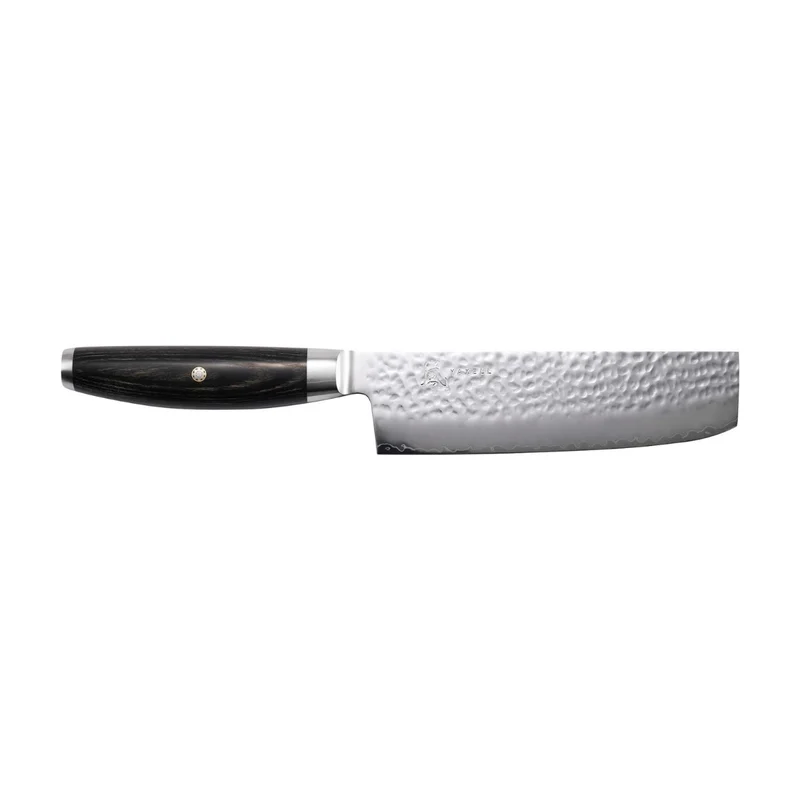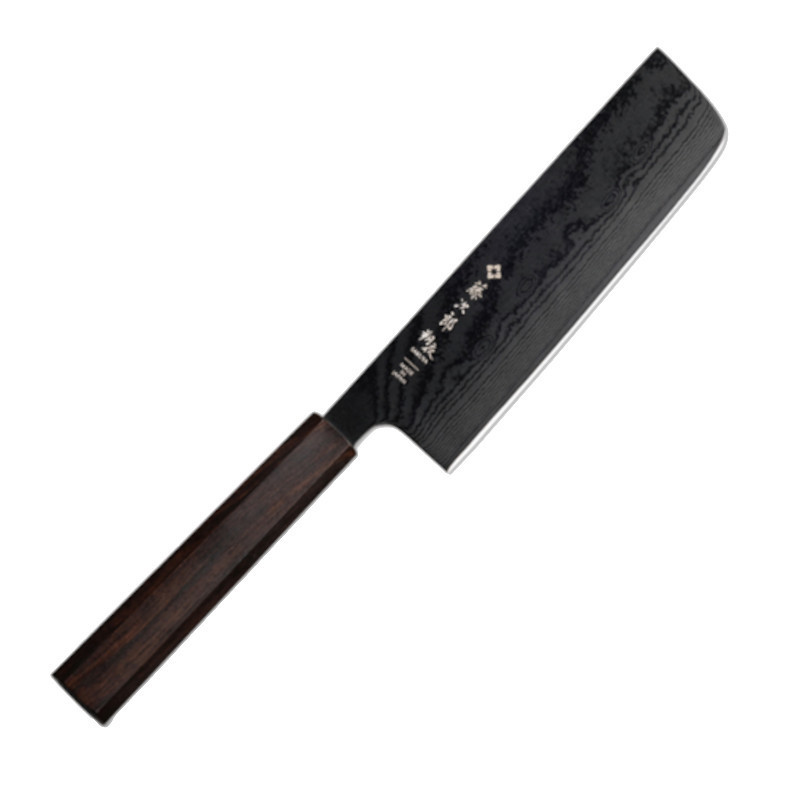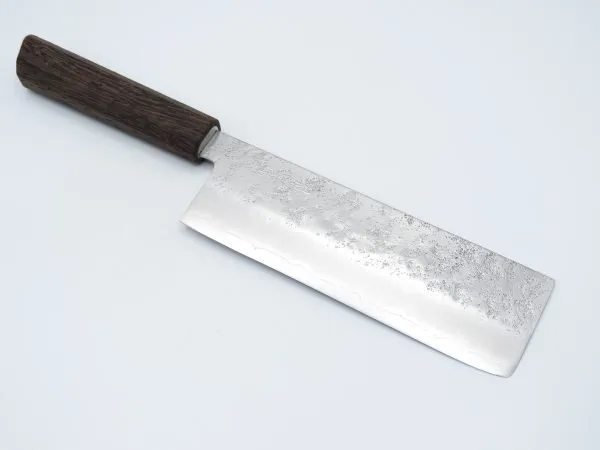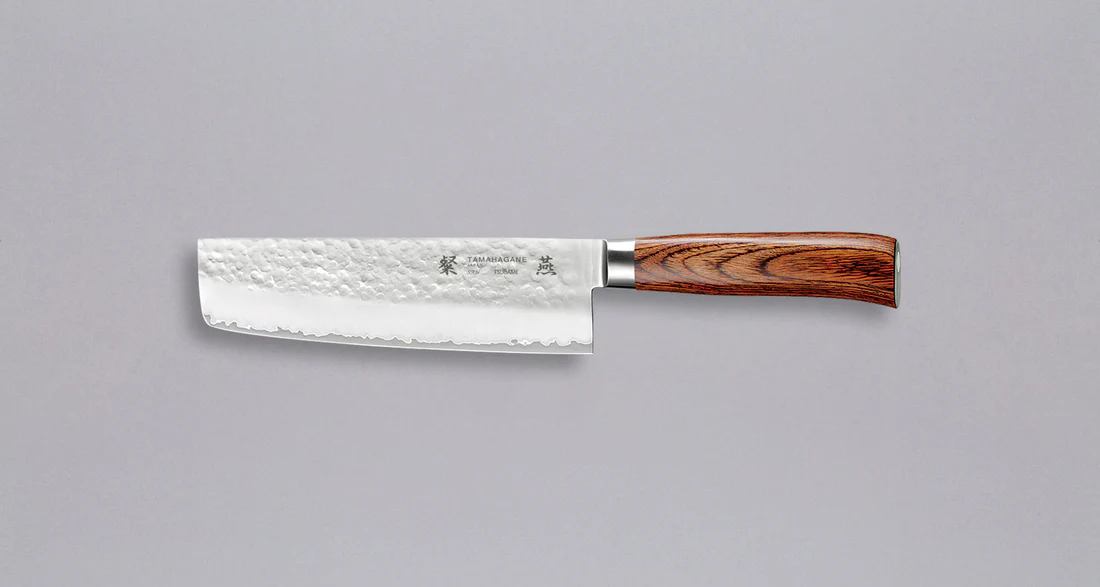
Nakiri knives are known as the best choice for chopping vegetables. This Japanese knife with a straight cutting edge allows precise, uniform cuts, making it ideal for preparing thin slices and julienne shapes. Its wide, rectangular design facilitates cutting multiple layers of stacked vegetables.
Tamahagane San Nakiri 180 mm is a reliable kitchen tool, especially suitable for chopping and slicing on a cutting board. Whether used at home or in a professional kitchen, it is an excellent choice for vegetable enthusiasts.
This model belongs to one of the oldest and most widely used types of Japanese knives. The name Nakiri or Nakiri Bocho translates to "leaf cutter." Thanks to its straight cutting edge and specific shape, it ensures precise cuts, making it particularly suitable for chefs who process large amounts of vegetables daily.
VG-5 steel is part of the V Gold series, known for its resistance to corrosion. Produced by Takefu Steel Ltd., this high-quality material offers exceptional sharpness and durability. In addition to being robust, it is easy to maintain and sharpen.
The VG-5 steel core is surrounded by two outer layers of SUS410 stainless steel, which enhances flexibility and protects the central layer from external influences.
Through forging, the initial thickness of 20 mm is compressed to just 2 mm, achieving remarkable cutting precision. Tamahagane knives are renowned for their thin blades, which retain sharpness for extended periods and are easy to resharpen.
The blade’s final finish includes subtle hammer marks, creating a matte effect that contributes to its distinctive appearance.
The handle is made from layered light brown wood (Pakka). It is slightly larger than standard Japanese handles, providing a secure and comfortable grip. Suitable for both left- and right-handed users, it is especially convenient for chefs with larger hands who prefer the ergonomic stability of Western-style handles.
Tamahagane knives originate from the Tsubame-Sanjo region in Niigata Prefecture, an area known for its traditional steel craftsmanship combined with modern technology.
Specifications:
Blade shape: Nakiri
Steel: VG-5
Composition: San-mai / V-edge / tsuchime
Hardness: 61 HRC
Total length: 315 mm
Blade length: 180 mm
Blade width: 49 mm
Blade thickness: 2 mm
Weight: 215 g
Handle type/material: Western-style / Pakka
Forge: Tamahagane
Origin: Tsubame-Sanjo, Niigata, Japan
Kanji on the blade: Tamahagane
Care and Maintenance of Japanese Knives
✅ Proper Knife Care
Always hand wash the knife with warm water and dry it immediately with a soft cloth to maintain sharpness and quality.
To keep the edge precise, water stones are recommended for sharpening, while ceramic honing rods help refine the blade during regular use.
Store the knife in a safe place, avoiding contact with other kitchen utensils that could damage the edge.
Use wooden, plastic, or rubber cutting boards to protect the blade and extend its lifespan.
⚠️ Special Note for Traditional Japanese Steels
Japanese knives made from high-carbon steel require extra care to prevent oxidation and rust.
After each use, thoroughly clean the blade with warm water and immediately dry it completely with a soft cloth.
Applying a thin layer of mineral or camellia oil occasionally can further protect the blade from corrosion.
Knives should be stored in a dry place, avoiding prolonged exposure to moisture or contact with aggressive cleaning agents.
? Improper Use
Do not cut on hard surfaces like glass, ceramics, steel, metal tables, or baking trays.
Avoid cutting bones or frozen ingredients, as this can damage the blade edge.
Do not wash the knife in a dishwasher—chemicals and high temperatures can negatively impact the blade and handle.
A Japanese knife is a precision tool, designed for specific culinary tasks. Do not use it for inappropriate activities like chopping bones, opening cans, or handling non-food materials.
Send request