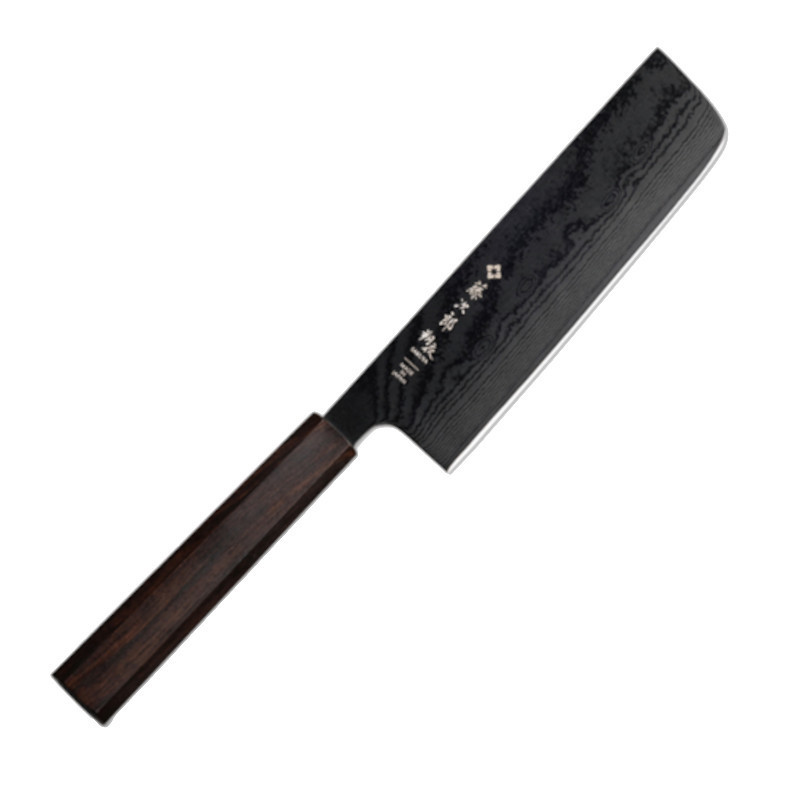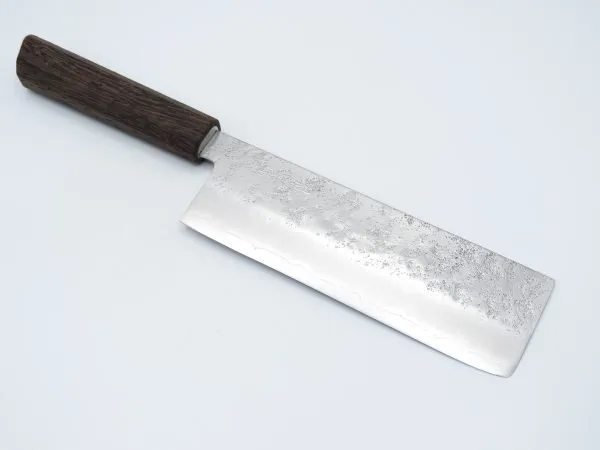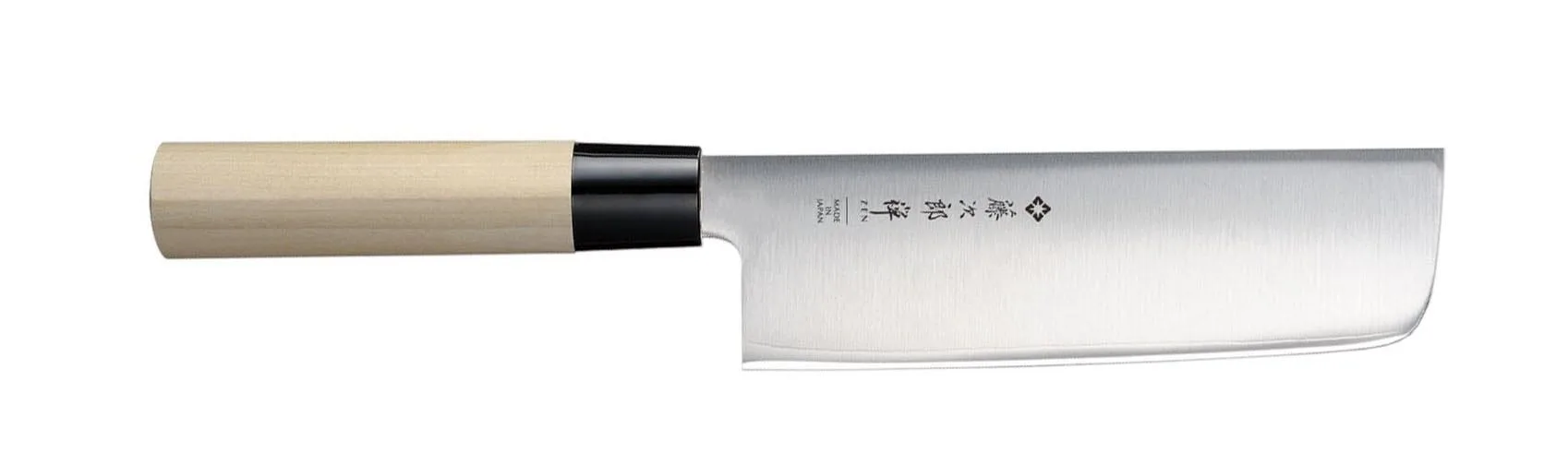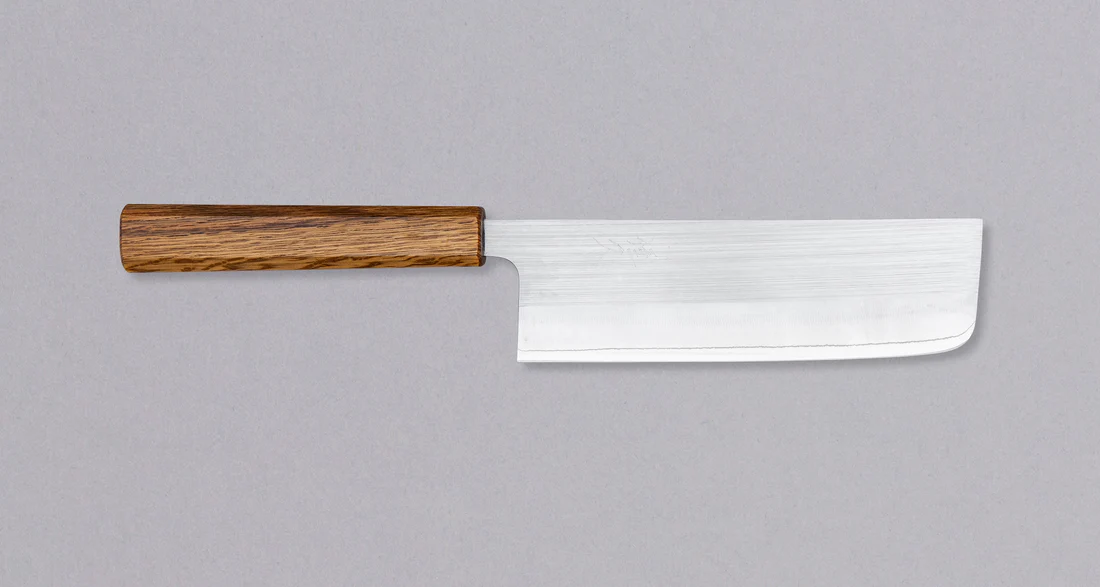
Nakiri knife is a traditional Japanese kitchen tool with a rectangular blade and a flat profile. Due to its square tip, the entire blade makes contact with the cutting surface during use, allowing for precise chopping without extra pressure or pulling. Because of these features, it is particularly suitable for vegetable preparation but can also be used as a versatile kitchen knife.
The literal translation of Nakiri Bocho (菜切り包丁) means “vegetable chopper” – “Na” means vegetable, and “Kiri” means chopping.
SRS13 is a high-tech powdered steel developed by Nachi-Fujikoshi, one of Japan’s leading steel manufacturers. It is heat-treated to approximately 64 HRC, giving it exceptional hardness and durability. In addition to being extremely hard, SRS13 is also remarkably tough, meaning it won't chip easily like some other powdered steels. It is completely stainless and does not develop a patina, making maintenance effortless.
The blade is polished in a Japanese “hair-line” style and attached to a simple yet durable traditional Wa handle made from oak wood. Thanks to its ultra-thin blade and even thinner concave grind, this knife falls into the category of lightweight, medium-sized Japanese kitchen knives.
A combination of premium steel, refined Japanese design, easy maintenance, and an affordable price makes this Nakiri knife an excellent choice.
Forge: The Tsunehisa brand includes knives of varying qualities from Japan’s top knife-making regions: Tosa, Seki, and Sakai. Their philosophy is based on the principle that each region has its own steel and manufacturing techniques. Tosa is best known for Ginsako and Aus-8 steels, Seki excels at crafting high-end blades from V-Gold steel series, while Sakai is renowned for single-beveled Honyaki knives.
Care and Maintenance of Japanese Knives
✅ Proper Knife Care
Always hand wash the knife with warm water and dry it immediately with a soft cloth to maintain sharpness and quality.
To keep the edge precise, water stones are recommended for sharpening, while ceramic honing rods help refine the blade during regular use.
Store the knife in a safe place, avoiding contact with other kitchen utensils that could damage the edge.
Use wooden, plastic, or rubber cutting boards to protect the blade and extend its lifespan.
⚠️ Special Note for Traditional Japanese Steels
Japanese knives made from high-carbon steel require extra care to prevent oxidation and rust.
After each use, thoroughly clean the blade with warm water and immediately dry it completely with a soft cloth.
Applying a thin layer of mineral or camellia oil occasionally can further protect the blade from corrosion.
Knives should be stored in a dry place, avoiding prolonged exposure to moisture or contact with aggressive cleaning agents.
? Improper Use
Do not cut on hard surfaces like glass, ceramics, steel, metal tables, or baking trays.
Avoid cutting bones or frozen ingredients, as this can damage the blade edge.
Do not wash the knife in a dishwasher—chemicals and high temperatures can negatively impact the blade and handle.
A Japanese knife is a precision tool, designed for specific culinary tasks. Do not use it for inappropriate activities like chopping bones, opening cans, or handling non-food materials.
Send request