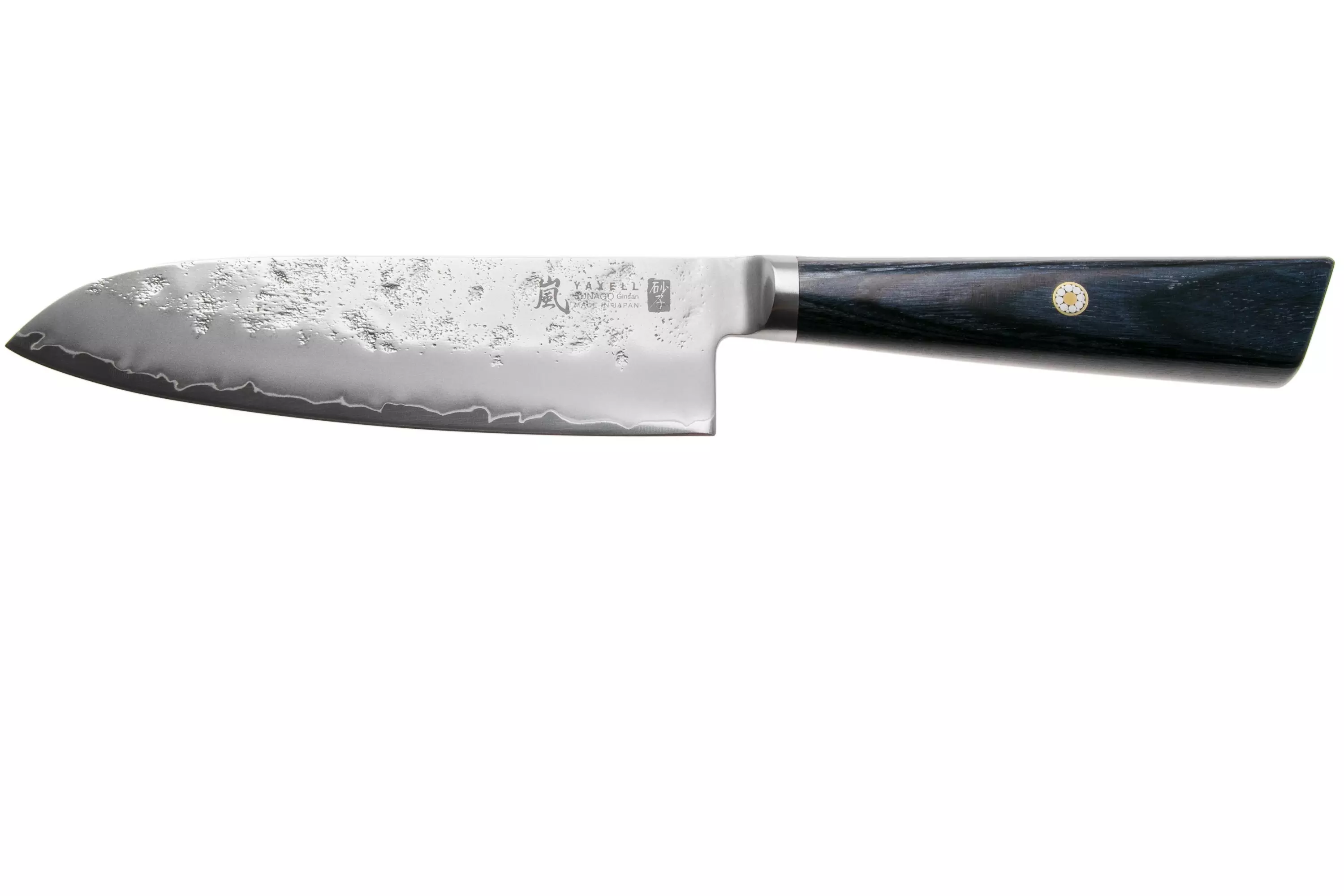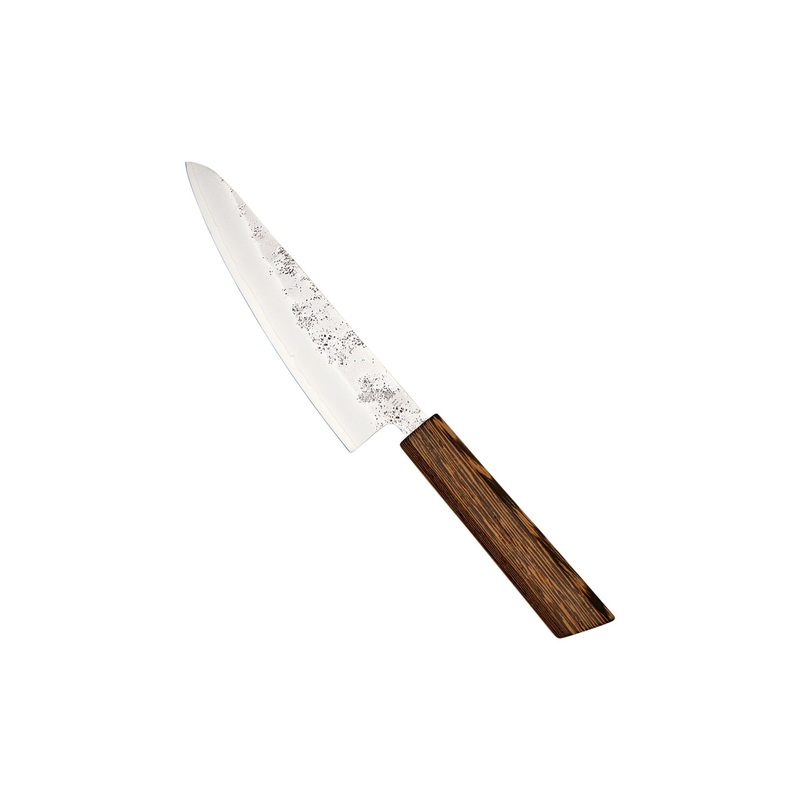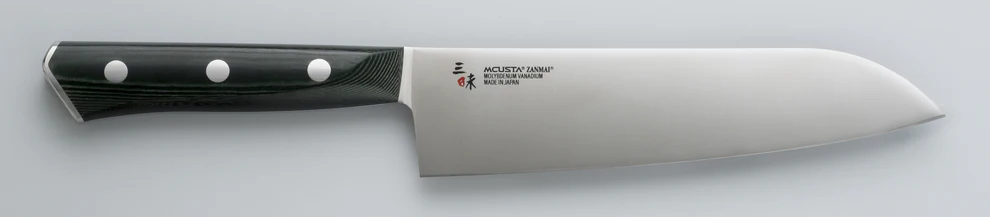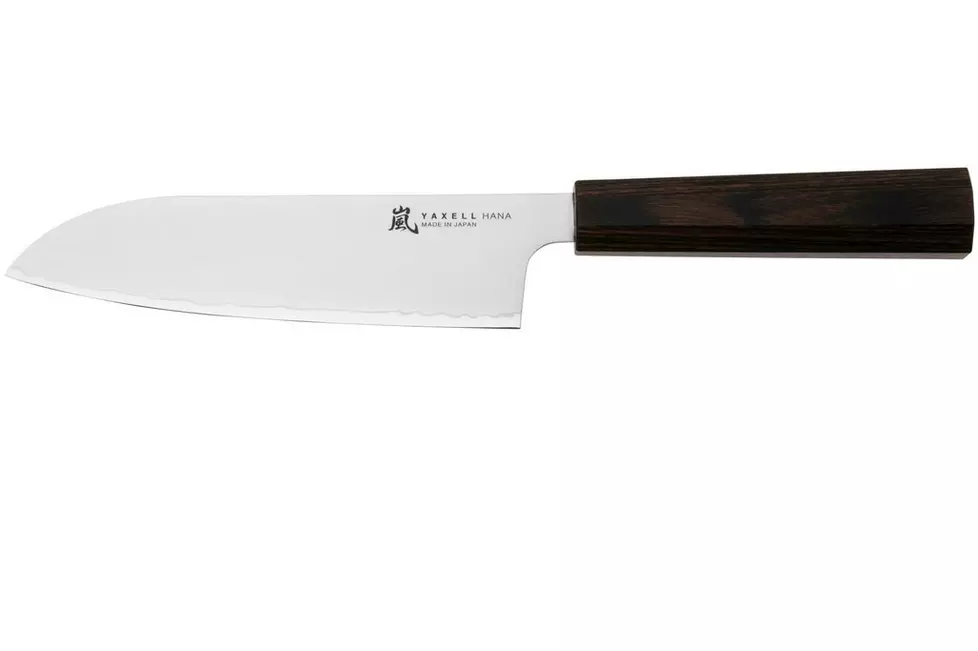
Yaxell Hana Santoku – Three Good Things in One Knife
In Japanese cuisine, Santoku literally means "three good things," referring to the three fundamental techniques of cutting, chopping, and mincing. This is why Santoku is the Japanese version of the classic European chef’s knife, adapted for seamless precision and versatility.
MOVAKS Steel – Long-lasting Sharpness & Superior Resistance
The blade’s core is made from MOVAKS superior stainless steel, coated with high-quality stainless steel on both sides. The chromium, molybdenum, and vanadium composition ensures a Rockwell hardness of 58 HRC, providing exceptional durability, long-lasting sharpness, and precision.
Exceptionally Sharp Cutting Angle
With uncompromising sharpness and resilience, the cutting angle of this Santoku knife guarantees smooth, effortless slicing, making food preparation faster and more enjoyable.
Brown Pakkawood Handle – Stability & Comfort
The octagonal ergonomic handle, crafted from Pakkawood, is resistant to temperature variations and moisture, ensuring perfect balance and maximum control during cutting.
A Blend of Functionality & Superior Craftsmanship
A perfectly crafted knife, designed to accompany you on every culinary journey. As part of Yaxell’s Hana series, this model offers a budget-friendly yet premium alternative, making it an excellent choice for both professionals and enthusiasts.
Care and Maintenance of Japanese Knives
✅ Proper Knife Care
Always hand wash the knife with warm water and dry it immediately with a soft cloth to maintain sharpness and quality.
To keep the edge precise, water stones are recommended for sharpening, while ceramic honing rods help refine the blade during regular use.
Store the knife in a safe place, avoiding contact with other kitchen utensils that could damage the edge.
Use wooden, plastic, or rubber cutting boards to protect the blade and extend its lifespan.
⚠️ Special Note for Traditional Japanese Steels
Japanese knives made from high-carbon steel require extra care to prevent oxidation and rust.
After each use, thoroughly clean the blade with warm water and immediately dry it completely with a soft cloth.
Applying a thin layer of mineral or camellia oil occasionally can further protect the blade from corrosion.
Knives should be stored in a dry place, avoiding prolonged exposure to moisture or contact with aggressive cleaning agents.
? Improper Use
Do not cut on hard surfaces like glass, ceramics, steel, metal tables, or baking trays.
Avoid cutting bones or frozen ingredients, as this can damage the blade edge.
Do not wash the knife in a dishwasher—chemicals and high temperatures can negatively impact the blade and handle.
A Japanese knife is a precision tool, designed for specific culinary tasks. Do not use it for inappropriate activities like chopping bones, opening cans, or handling non-food materials.
Send request