Yaxell Ketu Boning – Precision in Deboning
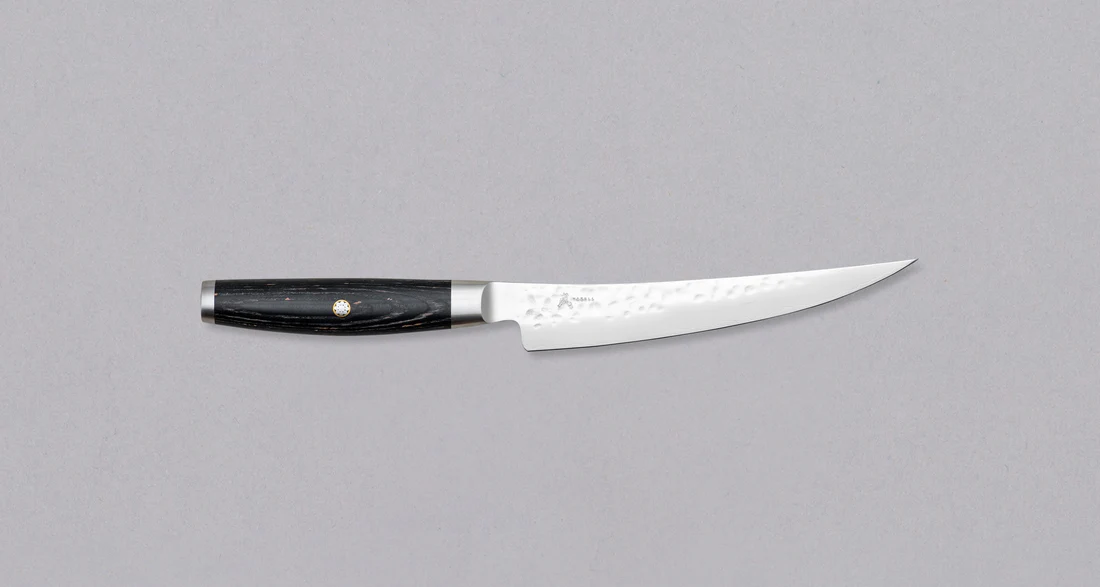
For those seeking flawless precision, the Yaxell Ketu Boning knife is a top-tier tool designed for removing meat from bones. Crafted with three layers of stainless steel, featuring a core of ultra-hard SG2 steel (63 HRC), this knife represents the perfect balance of sharpness, durability, and control.
Design for Ultimate Control
Its uniquely shaped blade and ergonomic black pakkawood handle provide various grips and cutting techniques, making it effortless to work around bones. The perfect weight distribution between the blade and handle ensures stability and comfort, making cutting easy, precise, and safe.
Premium Materials for Long-lasting Sharpness
At the heart of this knife is SG2 powdered steel (63 HRC), one of the hardest steels used in Japanese knife-making. The San-mai laminated construction features an SG2 core between two layers of softer stainless steel, ensuring durability and easy maintenance.
Blade Geometry and Finger Protection
The double-beveled blade with a V-edge profile offers an optimal balance between cutting ability and durability. The bolster support at the handle prevents fingers from slipping along the blade, guaranteeing safe handling.
Elegant Finishing Touches
The blade features a delicate tsuchime hammered pattern, enhancing the beauty and authenticity of Yaxell craftsmanship. A mosaic rivet decorates the handle, and the bottom steel plate bears the traditional crest of the samurai family from which Yaxell originates.
For Culinary Enthusiasts & Professionals
Whether for home cooks or master chefs, the Yaxell Ketu Boning knife is an essential tool for flawless cuts, precision filleting, and effortless deboning. Yaxell, established in 1932, is renowned worldwide for producing top-quality Japanese kitchen knives, winning awards in Germany, Sweden, Denmark, and the USA.
Care and Maintenance of Japanese Knives
✅ Proper Knife Care
Always hand wash the knife with warm water and dry it immediately with a soft cloth to maintain sharpness and quality.
To keep the edge precise, water stones are recommended for sharpening, while ceramic honing rods help refine the blade during regular use.
Store the knife in a safe place, avoiding contact with other kitchen utensils that could damage the edge.
Use wooden, plastic, or rubber cutting boards to protect the blade and extend its lifespan.
⚠️ Special Note for Traditional Japanese Steels
Japanese knives made from high-carbon steel require extra care to prevent oxidation and rust.
After each use, thoroughly clean the blade with warm water and immediately dry it completely with a soft cloth.
Applying a thin layer of mineral or camellia oil occasionally can further protect the blade from corrosion.
Knives should be stored in a dry place, avoiding prolonged exposure to moisture or contact with aggressive cleaning agents.
? Improper Use
Do not cut on hard surfaces like glass, ceramics, steel, metal tables, or baking trays.
Avoid cutting bones or frozen ingredients, as this can damage the blade edge.
Do not wash the knife in a dishwasher—chemicals and high temperatures can negatively impact the blade and handle.
A Japanese knife is a precision tool, designed for specific culinary tasks. Do not use it for inappropriate activities like chopping bones, opening cans, or handling non-food materials.
Send request

.webp)