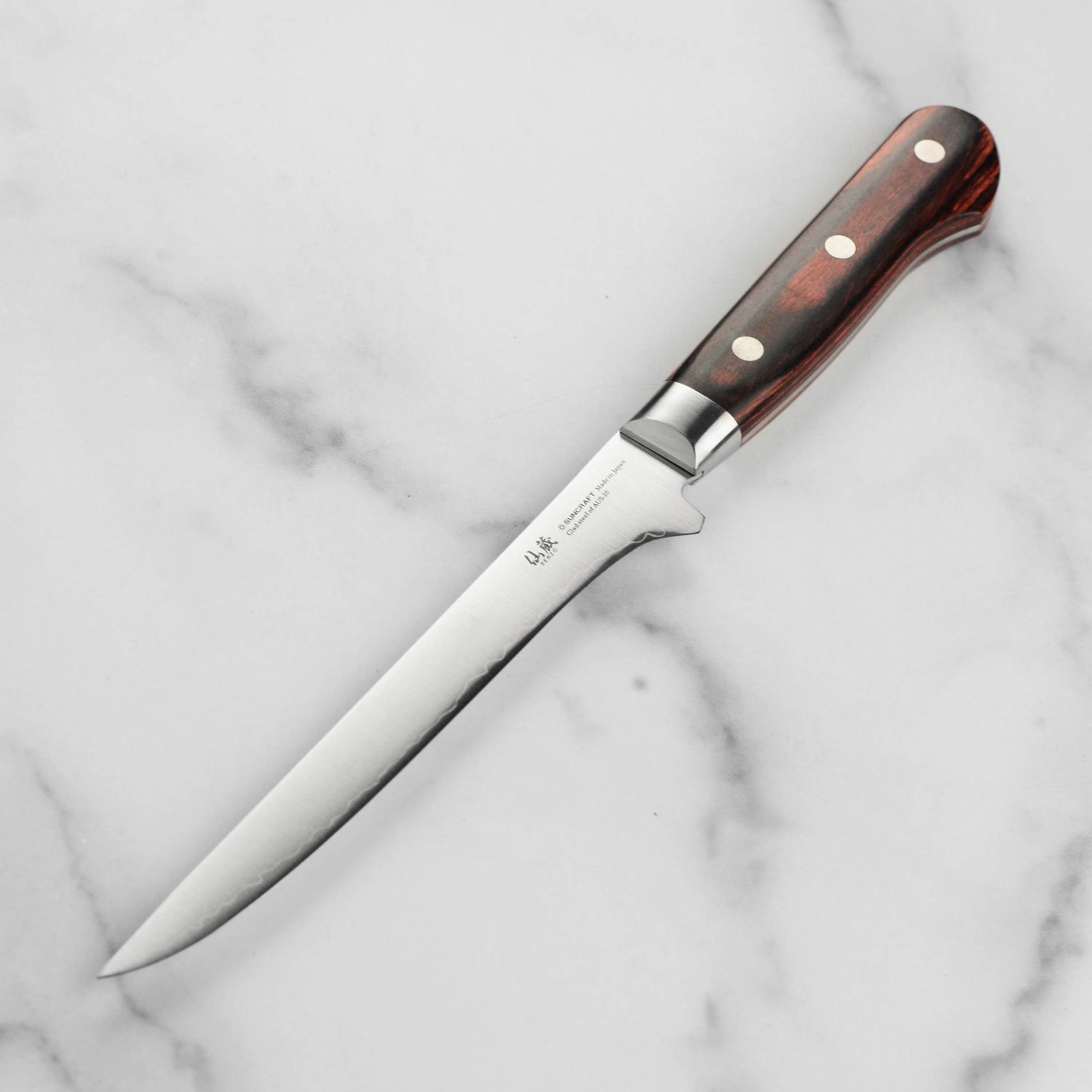
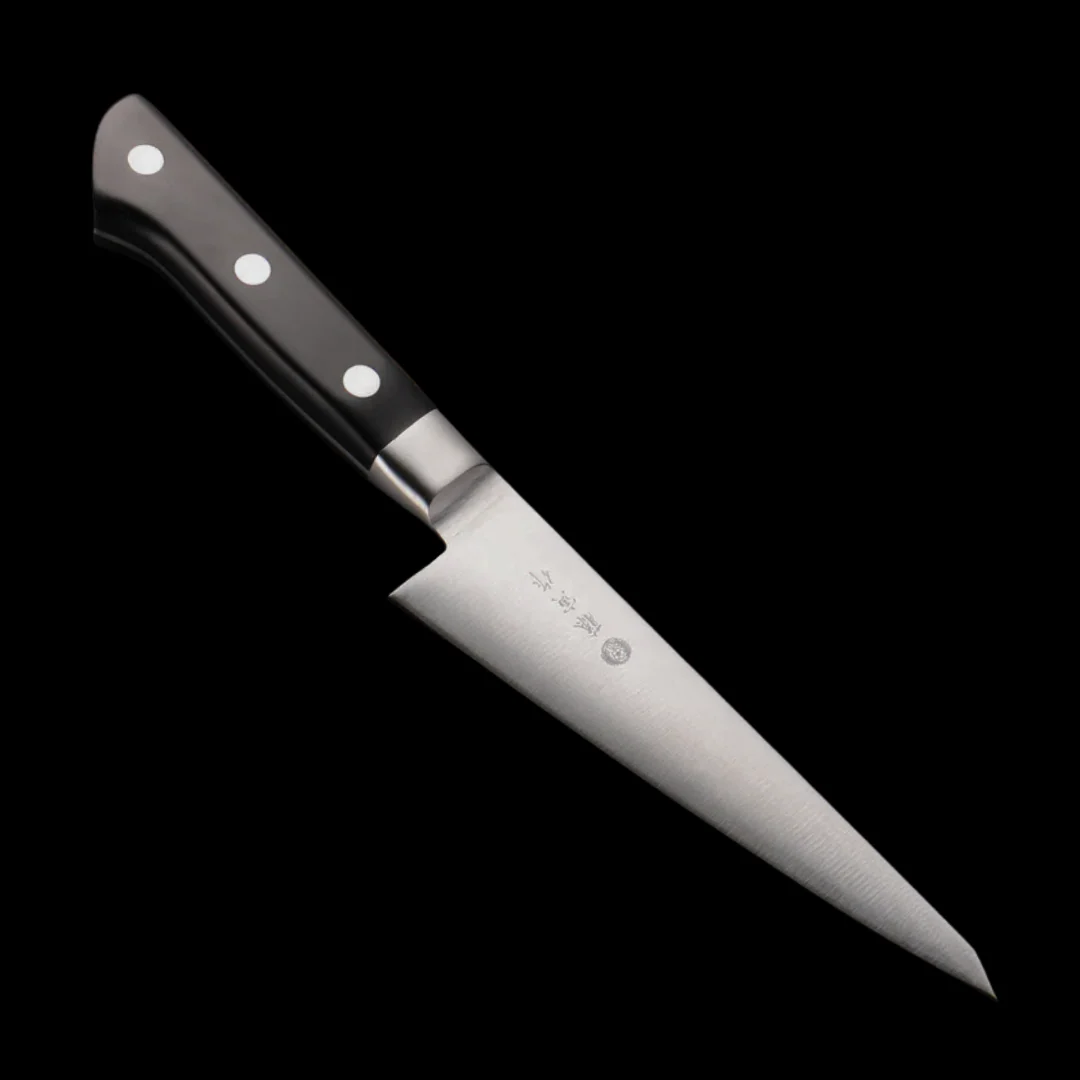
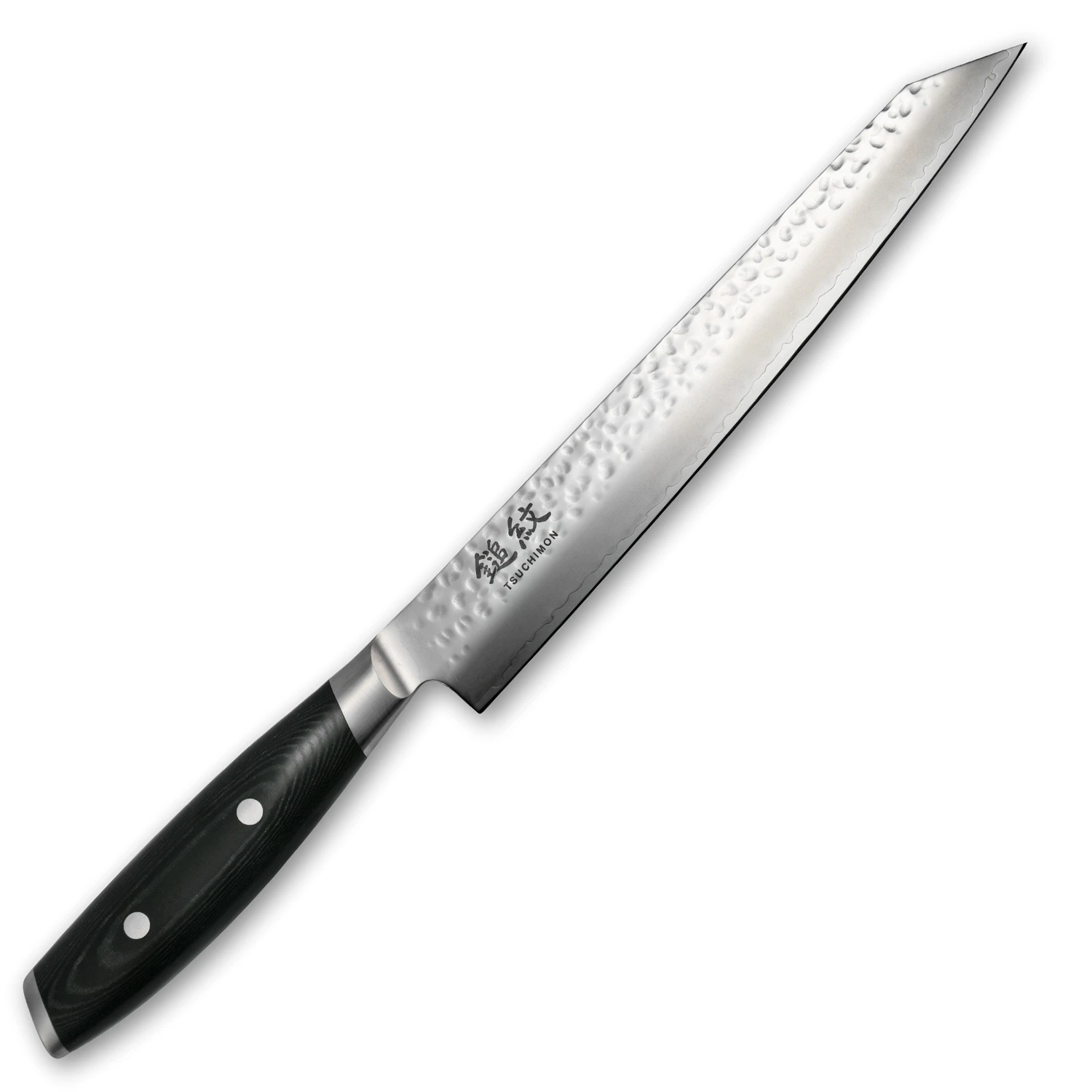
.webp)
The Yaxell Ketu slicer features an 18 cm blade made from trilaminate (San‑Mai) stainless steel, with a core of sintered SG2 powder‑metallurgy steel. The Rockwell hardness is 63 HRC, and the blade has a hammered Tsuchime finish, reducing friction and preventing food from sticking during slicing.
The handle is crafted from Pakka wood, adorned with the Yaxell kanji logo and a decorative samurai crest. This knife is engineered to deliver exceptional long‑lasting sharpness and precise cutting performance.
✅ Proper Maintenance
Hand-wash the knife with warm water, then dry it with a soft cloth to preserve sharpness and material quality.
For long-lasting precision, use whetstones, while ceramic honing rods are excellent for fine edge adjustments during use.
Always store the knife properly to avoid contact with other utensils and potential damage.
It is recommended to use cutting boards made of wood, plastic, or rubber, as they are gentler on the blade and prolong its lifespan.
⚠️ Special Note for Traditional Japanese Steels
Japanese knives with high carbon content require special care to prevent oxidation and rust.
After each use, thoroughly wash with warm water and immediately dry with a soft cloth.
It is advisable to occasionally apply a thin layer of mineral or camellia oil on the blade for additional protection against corrosion.
Store knives in a dry place, avoiding prolonged exposure to moisture or aggressive cleaning agents.
? What to Avoid
Do not use the knife on hard surfaces such as glass, ceramics, steel, metal tables, or baking trays.
Do not cut bones or frozen foods, as this can damage the knife edge.
Do not wash the knife in a dishwasher—chemicals and high temperatures can compromise the integrity of both blade and handle.
A Japanese knife is a precision tool designed for specific culinary tasks. Do not use it for improper activities such as cutting bones, opening cans, or processing hard materials.
Send request