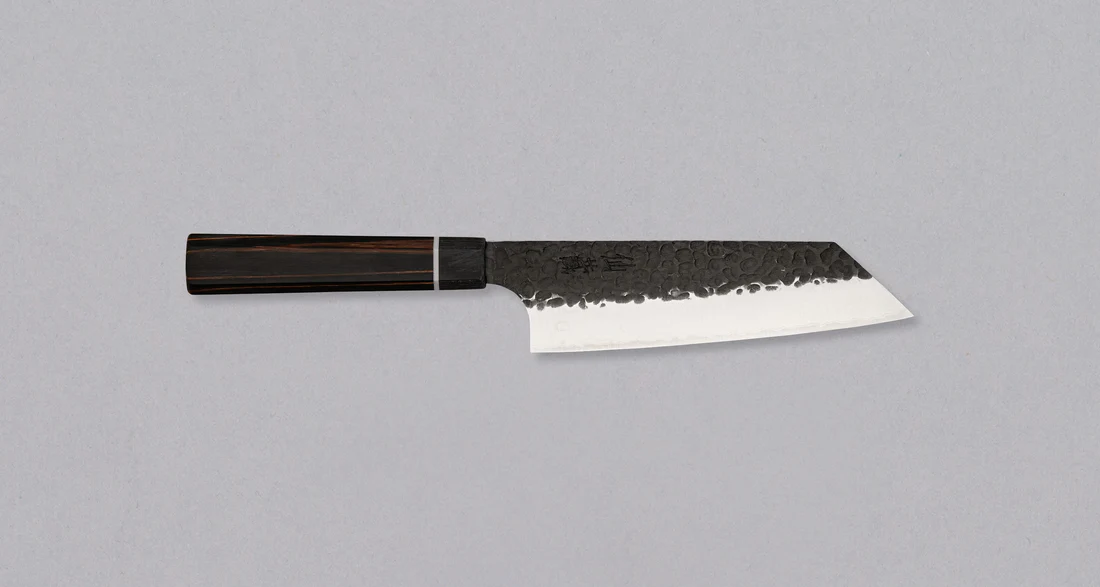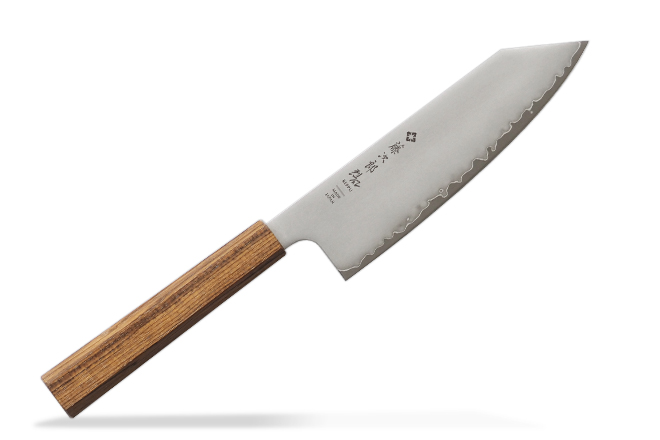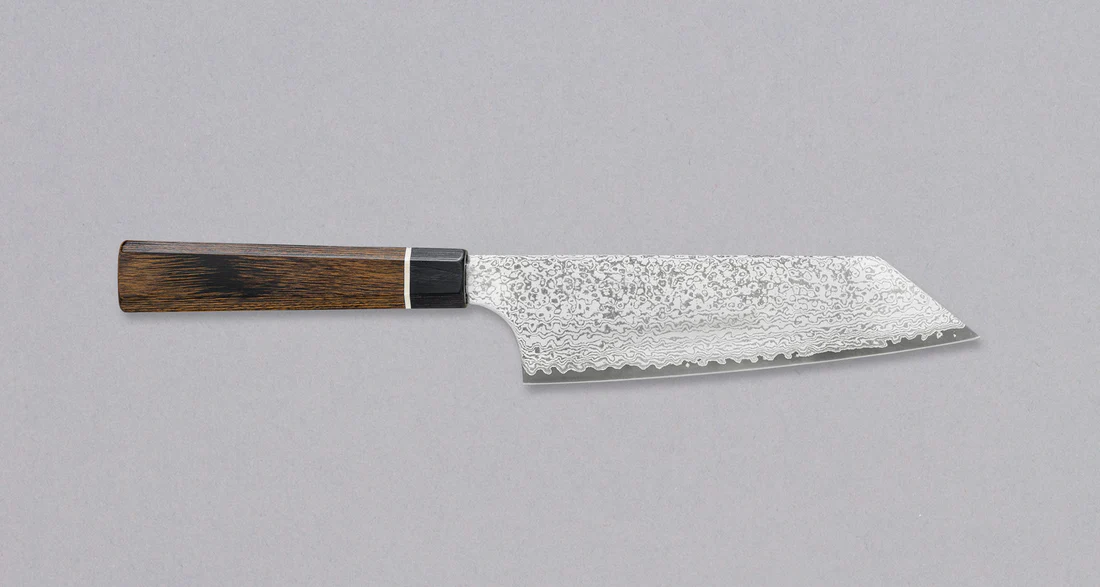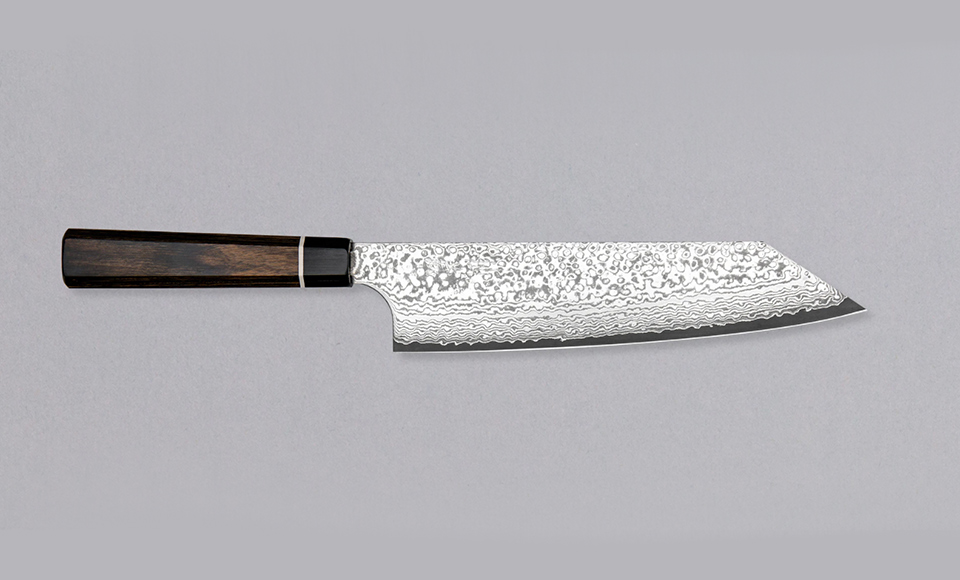
Over time, we have gained deep insights into the intricacies of Japanese knives — and into the people who use them with passion and precision. That's why designing a new knife was a natural continuation of our journey. We entrusted our vision of shape and material to skilled Japanese blacksmiths, knowing that nothing surpasses the centuries-old tradition of forging steel. The Bunka Black Damascus 200 mm, like every knife in our collection, is made in Japan.
Its 200 mm blade is clad in 33 layers of softer steel, forming a distinctive Damascus pattern that makes each knife truly unique. The exceptionally thin profile (just 1.8 mm) and hardened Japanese steel ensure long-lasting sharpness and smooth cutting performance.
The Bunka Black Damascus 200 mm is a versatile knife — ideal for slicing vegetables, meat, and fish. Although originally designed for home kitchens, it will undoubtedly delight professional chefs who seek a shorter, livelier, and highly functional blade.
✅ Proper Maintenance
Hand wash the knife with warm water and dry it immediately with a soft cloth to preserve its sharpness and material integrity.
For long-term precision, use whetstones for sharpening, while ceramic honing rods are excellent for fine edge adjustment during use.
Always store the knife properly to avoid contact with other kitchen tools and potential damage.
Use wooden, plastic, or rubber cutting boards, which are gentler on the edge and help extend the blade's lifespan.
⚠️ Special Note on Traditional Japanese Steels
Japanese knives with high-carbon steel blades require special care to prevent oxidation and rust formation.
After each use, wash thoroughly with warm water and dry immediately with a soft cloth.
Occasionally apply a thin layer of mineral or camellia oil to the blade for added corrosion protection.
Store knives in a dry place, avoiding prolonged exposure to moisture or contact with aggressive cleaning agents.
? What to Avoid
Do not use the knife on hard surfaces such as glass, ceramics, steel, metal tables, or baking trays.
Do not cut bones or frozen ingredients, as this can damage the edge.
Do not wash the knife in a dishwasher — chemicals and high temperatures can compromise the blade and handle.
A Japanese knife is a precision instrument designed for specific culinary tasks. Do not use it for unsuitable activities such as cutting bones, opening cans, or working with hard materials.
Send request