Mcusta Hybrid Splash – A Fusion of Tradition and Innovation
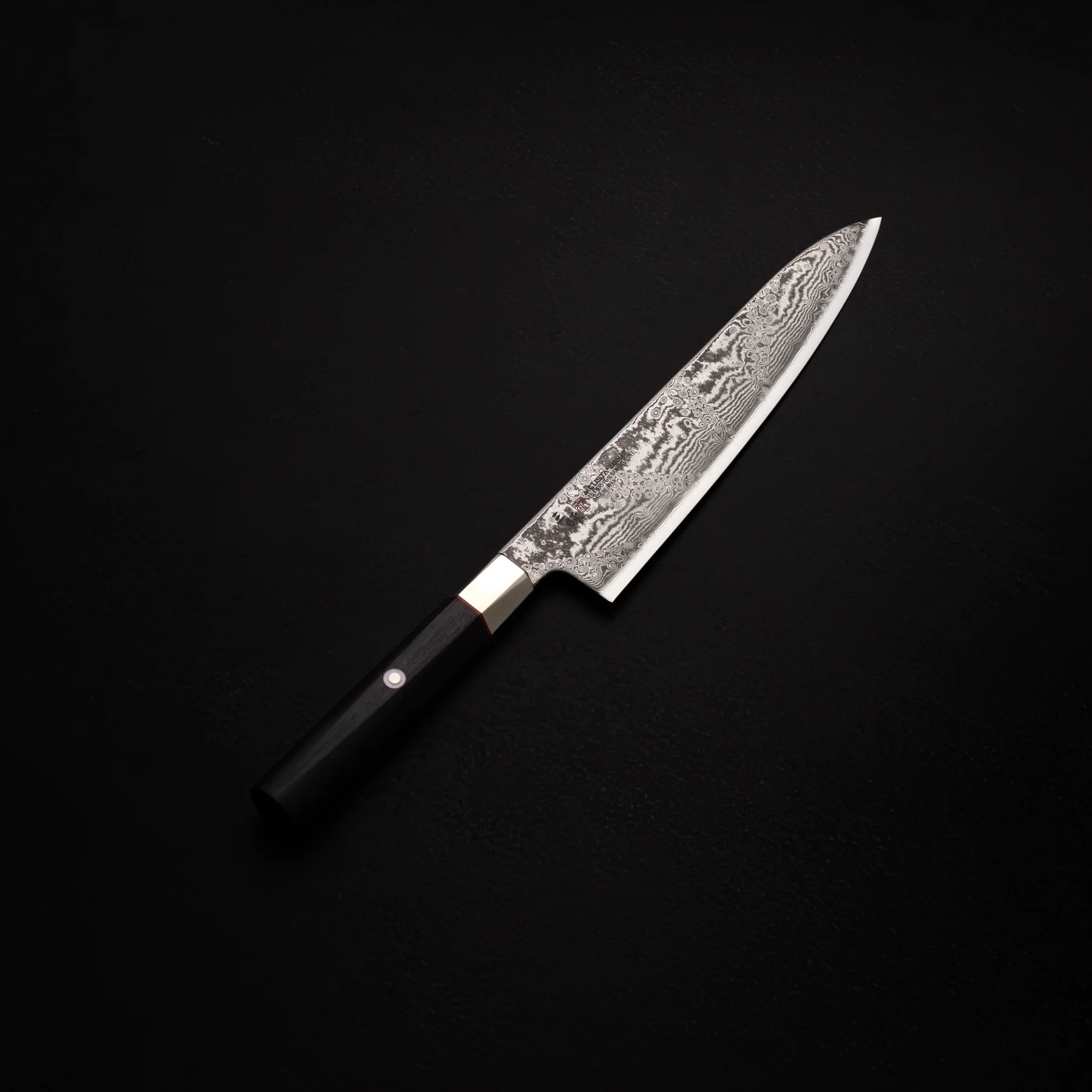
The Mcusta Hybrid Splash series represents the pinnacle of Japanese knife craftsmanship, merging centuries-old forging traditions from Seki City with cutting-edge technology. This fusion results in outstanding quality, where the flawless Zanmai finish truly shines. What sets this series apart are its intricate Damascus patterns, which are more developed and complex than those in other Mcusta models, making each knife uniquely one of a kind. From stunning mother-of-pearl details to an impeccably polished blade that reflects light like a mirror, Hybrid Splash is a top choice among Damascus-pattern enthusiasts.
Gyuto – The Most Versatile Kitchen Knife
Gyuto is regarded as the most practical and universal Japanese kitchen knife. It’s an excellent choice as a first Japanese knife, as it efficiently handles a broad range of culinary tasks—from mincing garlic to slicing large cuts of meat and fish. Its adaptability makes it an essential tool in any kitchen, regardless of cooking style.
Advanced Construction and Ergonomics
Hybrid Splash knives feature 33 layers of Damascus steel with a VG10 core, delivering exceptional durability, long-lasting sharpness, and distinctive aesthetics. Its thin spine and precisely honed edge provide a laser-like cutting experience, ensuring flawless performance.
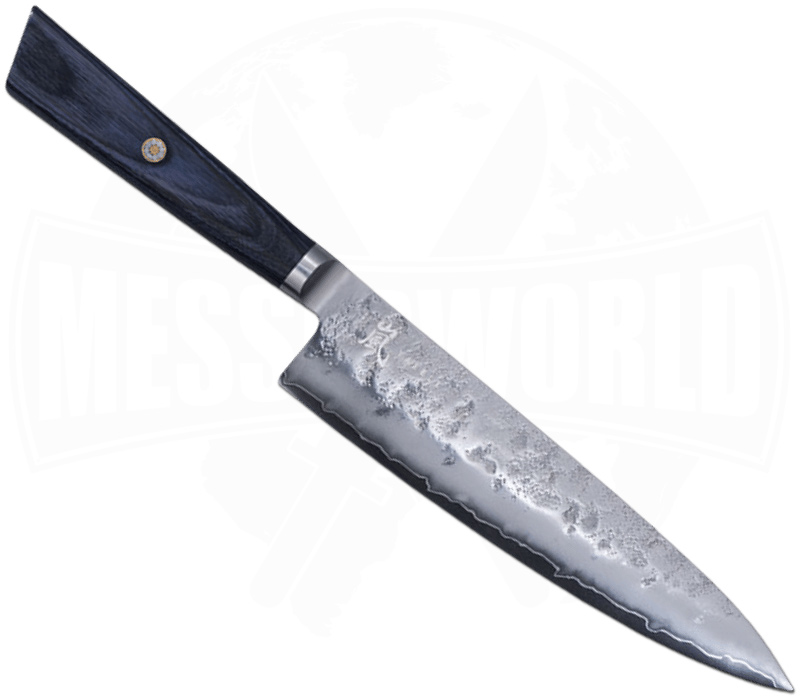
The handle is simple yet highly ergonomic. Made from non-slip pakkawood, its hexagonal shape gradually transitions into a rounded grip, preventing slippage and ensuring secure handling even with wet hands. A minimalist pin combined with a stainless steel bolster seamlessly complements the design, while the red decorative spacer adds a touch of elegance and visual contrast.
Specifications:
Manufacturer: Mcusta Zanmai
Blade Type: Gyuto
Blade Length: 210 mm
Overall Length: 350 mm
Knife Weight: 165 g
Bevel Type: Double bevel
Spine Thickness: 2 mm
Steel: VG10
Hardness HRC: 61±1
Care and Maintenance of Japanese Knives
✅ Proper Knife Care
Always hand wash the knife with warm water and dry it immediately with a soft cloth to maintain sharpness and quality.
To keep the edge precise, water stones are recommended for sharpening, while ceramic honing rods help refine the blade during regular use.
Store the knife in a safe place, avoiding contact with other kitchen utensils that could damage the edge.
Use wooden, plastic, or rubber cutting boards to protect the blade and extend its lifespan.
⚠️ Special Note for Traditional Japanese Steels
Japanese knives made from high-carbon steel require extra care to prevent oxidation and rust.
After each use, thoroughly clean the blade with warm water and immediately dry it completely with a soft cloth.
Applying a thin layer of mineral or camellia oil occasionally can further protect the blade from corrosion.
Knives should be stored in a dry place, avoiding prolonged exposure to moisture or contact with aggressive cleaning agents.
? Improper Use
Do not cut on hard surfaces like glass, ceramics, steel, metal tables, or baking trays.
Avoid cutting bones or frozen ingredients, as this can damage the blade edge.
Do not wash the knife in a dishwasher—chemicals and high temperatures can negatively impact the blade and handle.
A Japanese knife is a precision tool, designed for specific culinary tasks. Do not use it for inappropriate activities like chopping bones, opening cans, or handling non-food materials.
Send request

.jpg)