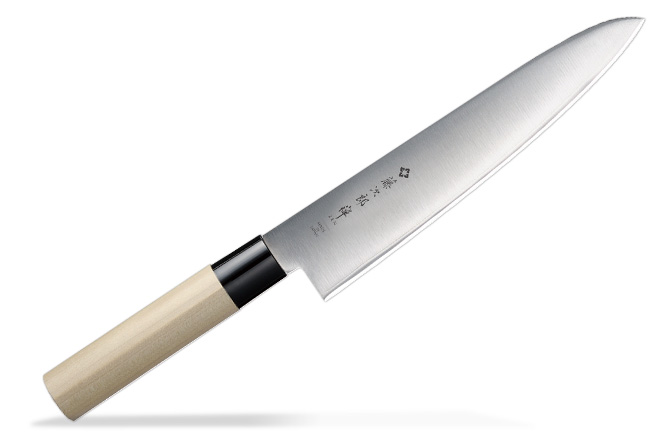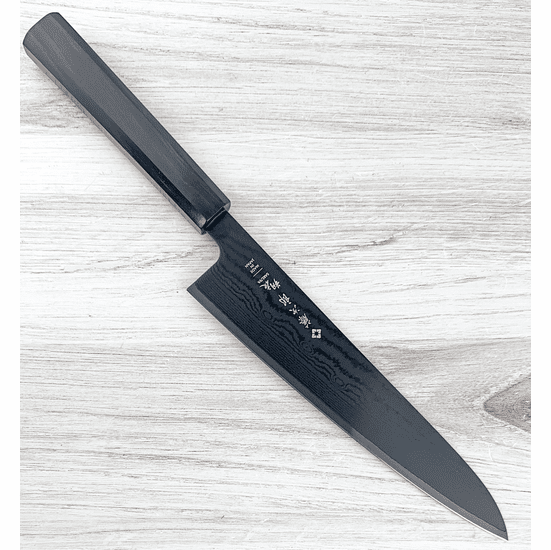
The TOJIRO SAKUYA line draws its visual identity from the Japanese concept of the moon – the jet‑black Damascus blade representing the new moon, and the polished crescent edge symbolizing the first light of the crescent. It is one of Tojiro’s most intentional design statements, crafted in Sanjo City by Matsumura‑san and his team at Tojiro’s newer facility, with a finish unlike anything else in the Tojiro catalog.
Beneath the striking surface lies a VG10 stainless core clad in layered Damascus steel and finished with electrolytic coloring that creates the deep black contrast between blade road and edge. At 210 mm, the gyuto format handles the full range of daily prep—proteins, vegetables, fish—with the all‑purpose capability that has made the Japanese gyuto the chef’s knife of choice worldwide.
The octagonal ebony handle pairs beautifully with the blade’s aesthetic and sits comfortably in a pinch grip during extended prep sessions. The distal taper keeps the tip responsive, and the balance point falls naturally for both rocking and push‑cutting techniques. The fit and finish are noticeably elevated compared to Tojiro’s entry‑level lines, and the price reflects this refinement.
Care and Maintenance of Japanese Knives
✅ Proper Knife Care
Always hand wash the knife with warm water and dry it immediately with a soft cloth to maintain sharpness and quality.
To keep the edge precise, water stones are recommended for sharpening, while ceramic honing rods help refine the blade during regular use.
Store the knife in a safe place, avoiding contact with other kitchen utensils that could damage the edge.
Use wooden, plastic, or rubber cutting boards to protect the blade and extend its lifespan.
⚠️ Special Note for Traditional Japanese Steels
Japanese knives made from high-carbon steel require extra care to prevent oxidation and rust.
After each use, thoroughly clean the blade with warm water and immediately dry it completely with a soft cloth.
Applying a thin layer of mineral or camellia oil occasionally can further protect the blade from corrosion.
Knives should be stored in a dry place, avoiding prolonged exposure to moisture or contact with aggressive cleaning agents.
? Improper Use
Do not cut on hard surfaces like glass, ceramics, steel, metal tables, or baking trays.
Avoid cutting bones or frozen ingredients, as this can damage the blade edge.
Do not wash the knife in a dishwasher—chemicals and high temperatures can negatively impact the blade and handle.
A Japanese knife is a precision tool, designed for specific culinary tasks. Do not use it for inappropriate activities like chopping bones, opening cans, or handling non-food materials.
Send request

.jpg)