.webp)
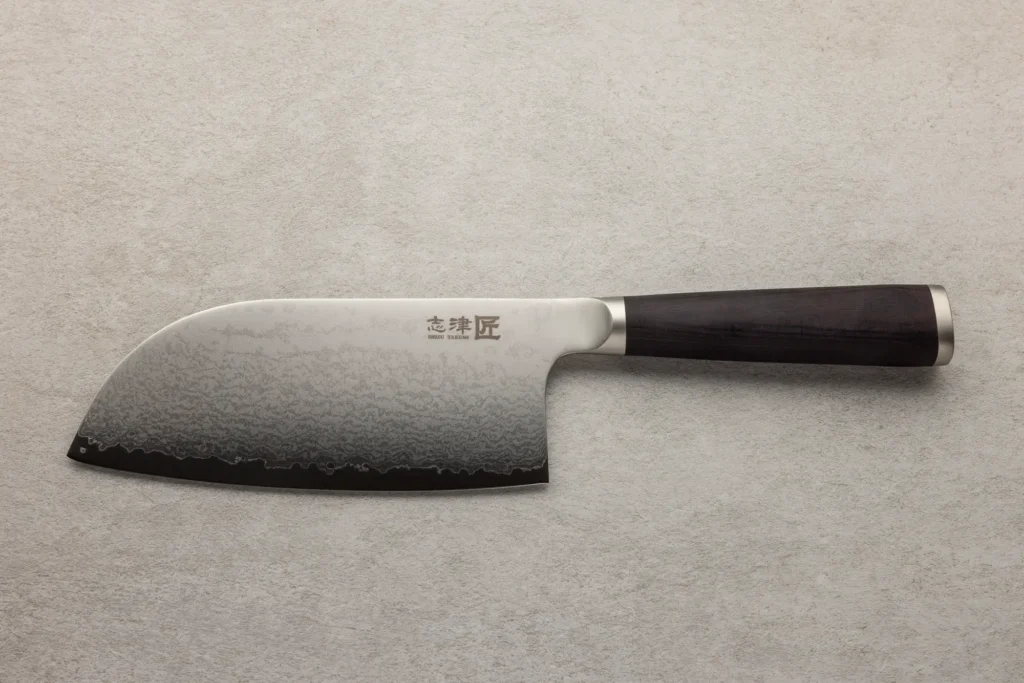
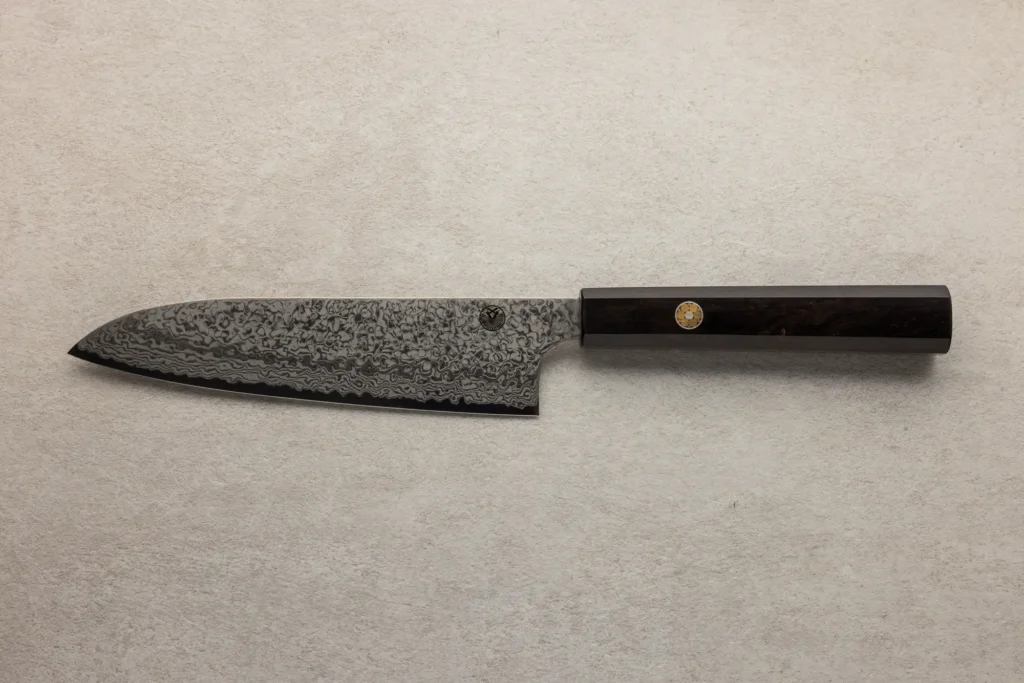
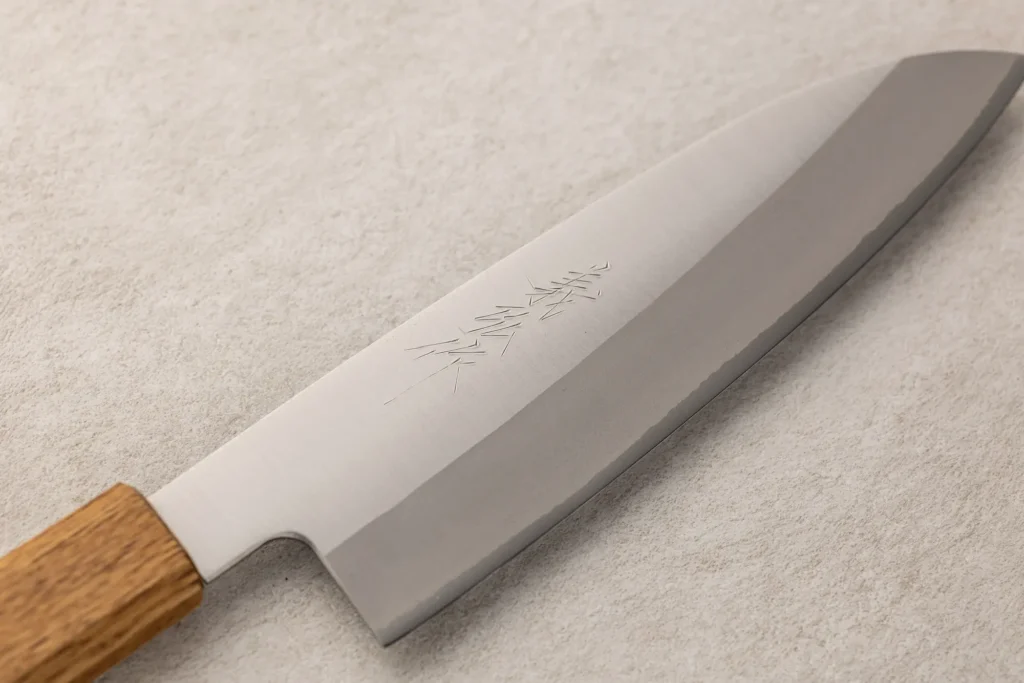
Shizu Hamono is a Japanese knife maker founded in 1959 in Seki, a city famous for its blacksmithing heritage. Its founder, Masami Horibe, grew up surrounded by craftsmen and naturally became one himself. The Yuri line features a clean, minimalist aesthetic that fits perfectly into modern kitchens. These knives are ideal for cooks of any skill level who want a reliable tool that doesn’t require delicate care.
The AUS8 steel takes a great edge, resists chipping, and offers excellent corrosion resistance. The pakkawood handle is both elegant and durable. Each knife comes in a beautiful Paulownia wood box, making it an excellent gift.
Care and Maintenance of Japanese Knives
✅ Proper Knife Care
Always hand wash the knife with warm water and dry it immediately with a soft cloth to maintain sharpness and quality.
To keep the edge precise, water stones are recommended for sharpening, while ceramic honing rods help refine the blade during regular use.
Store the knife in a safe place, avoiding contact with other kitchen utensils that could damage the edge.
Use wooden, plastic, or rubber cutting boards to protect the blade and extend its lifespan.
⚠️ Special Note for Traditional Japanese Steels
Japanese knives made from high-carbon steel require extra care to prevent oxidation and rust.
After each use, thoroughly clean the blade with warm water and immediately dry it completely with a soft cloth.
Applying a thin layer of mineral or camellia oil occasionally can further protect the blade from corrosion.
Knives should be stored in a dry place, avoiding prolonged exposure to moisture or contact with aggressive cleaning agents.
? Improper Use
Do not cut on hard surfaces like glass, ceramics, steel, metal tables, or baking trays.
Avoid cutting bones or frozen ingredients, as this can damage the blade edge.
Do not wash the knife in a dishwasher—chemicals and high temperatures can negatively impact the blade and handle.
A Japanese knife is a precision tool, designed for specific culinary tasks. Do not use it for inappropriate activities like chopping bones, opening cans, or handling non-food materials.
Send request