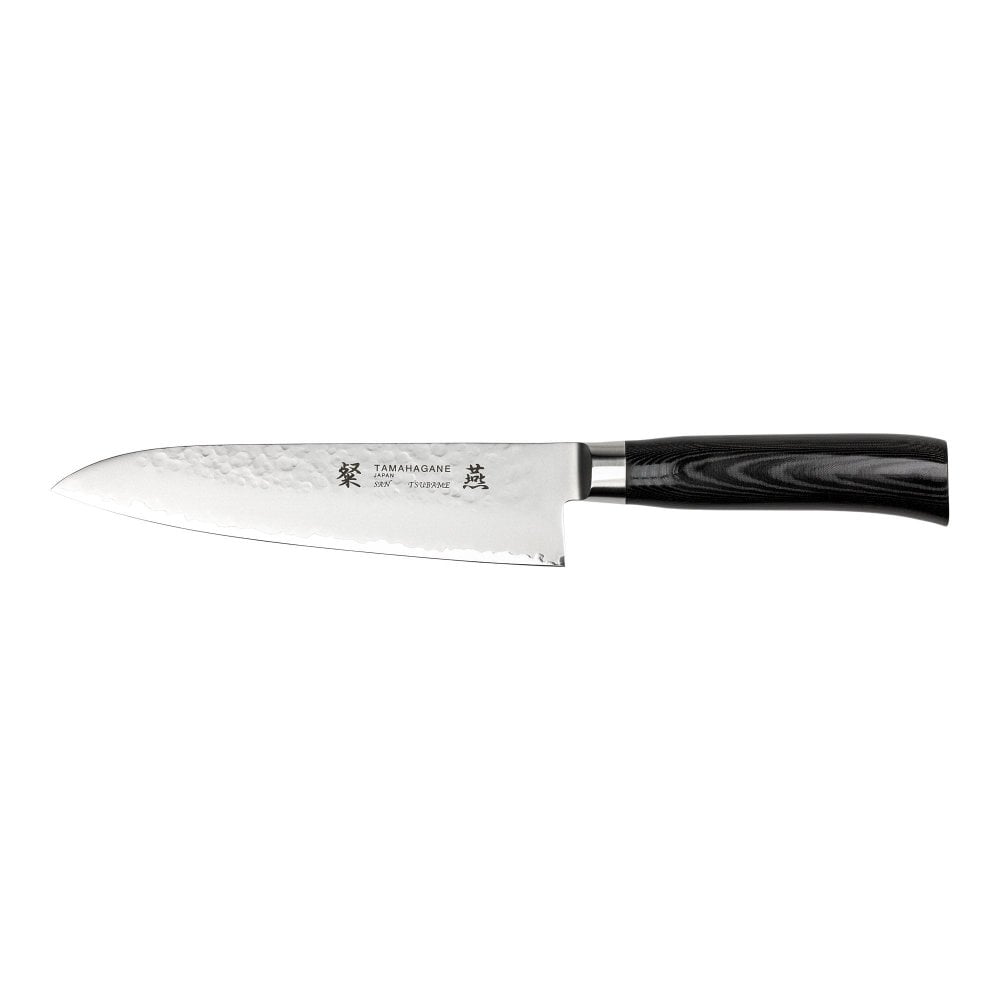
The Tamahagane San Tsubame 18 cm chef’s knife features a gently curved blade and exceptional strength, allowing it to excel at a wide range of kitchen tasks. As a chef’s knife, it is a multi‑purpose, all‑round tool, suitable for cutting vegetables, meat, fish, and general food preparation. This model is available in several sizes.
Tamahagane Tsubame knives are made using a three‑layer stainless steel construction. The central layer is VG‑5 steel, which forms the cutting edge. This layer is exceptionally hard (61 HRC) — as hard as VG‑10 stainless steel but with superior edge retention. The two outer layers are stainless steel, which is softer and more stain‑resistant, protecting the hard core.
The blade is rolled and thinned to just 2 mm, giving the knife outstanding sharpness and cutting performance. The hammered finish reduces food sticking and enhances the knife’s aesthetic appeal. The handle is made of black micarta and weighted for balance.
✅ Proper Maintenance
Hand-wash the knife with warm water, then dry it with a soft cloth to preserve sharpness and material quality.
For long-lasting precision, use whetstones, while ceramic honing rods are excellent for fine edge adjustments during use.
Always store the knife properly to avoid contact with other utensils and potential damage.
It is recommended to use cutting boards made of wood, plastic, or rubber, as they are gentler on the blade and prolong its lifespan.
⚠️ Special Note for Traditional Japanese Steels
Japanese knives with high carbon content require special care to prevent oxidation and rust.
After each use, thoroughly wash with warm water and immediately dry with a soft cloth.
It is advisable to occasionally apply a thin layer of mineral or camellia oil on the blade for additional protection against corrosion.
Store knives in a dry place, avoiding prolonged exposure to moisture or aggressive cleaning agents.
? What to Avoid
Do not use the knife on hard surfaces such as glass, ceramics, steel, metal tables, or baking trays.
Do not cut bones or frozen foods, as this can damage the knife edge.
Do not wash the knife in a dishwasher—chemicals and high temperatures can compromise the integrity of both blade and handle.
A Japanese knife is a precision tool designed for specific culinary tasks. Do not use it for improper activities such as cutting bones, opening cans, or processing hard materials.
Send request

.jpg)