.jpg)
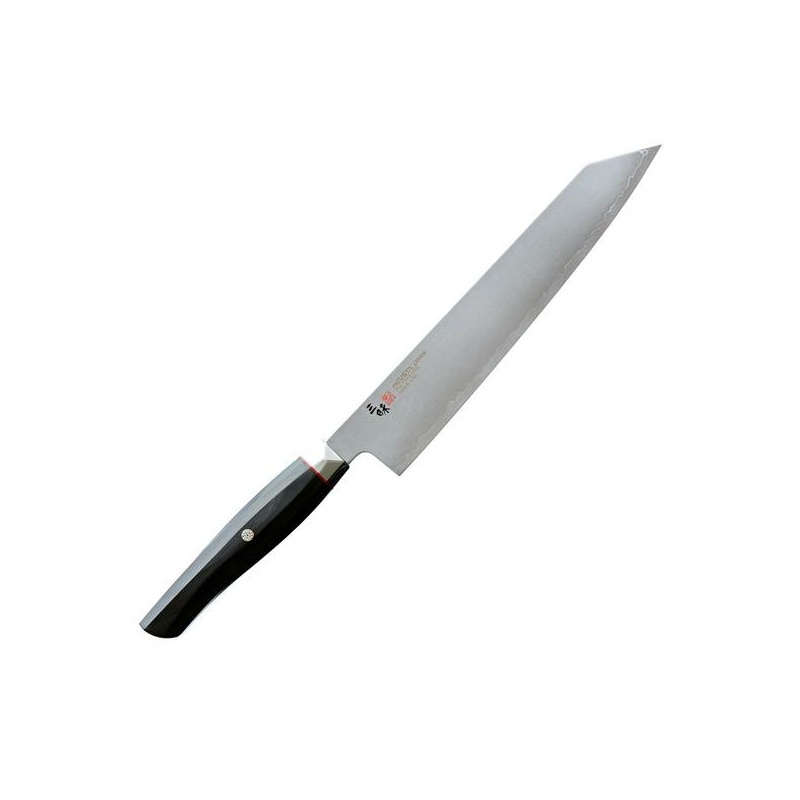
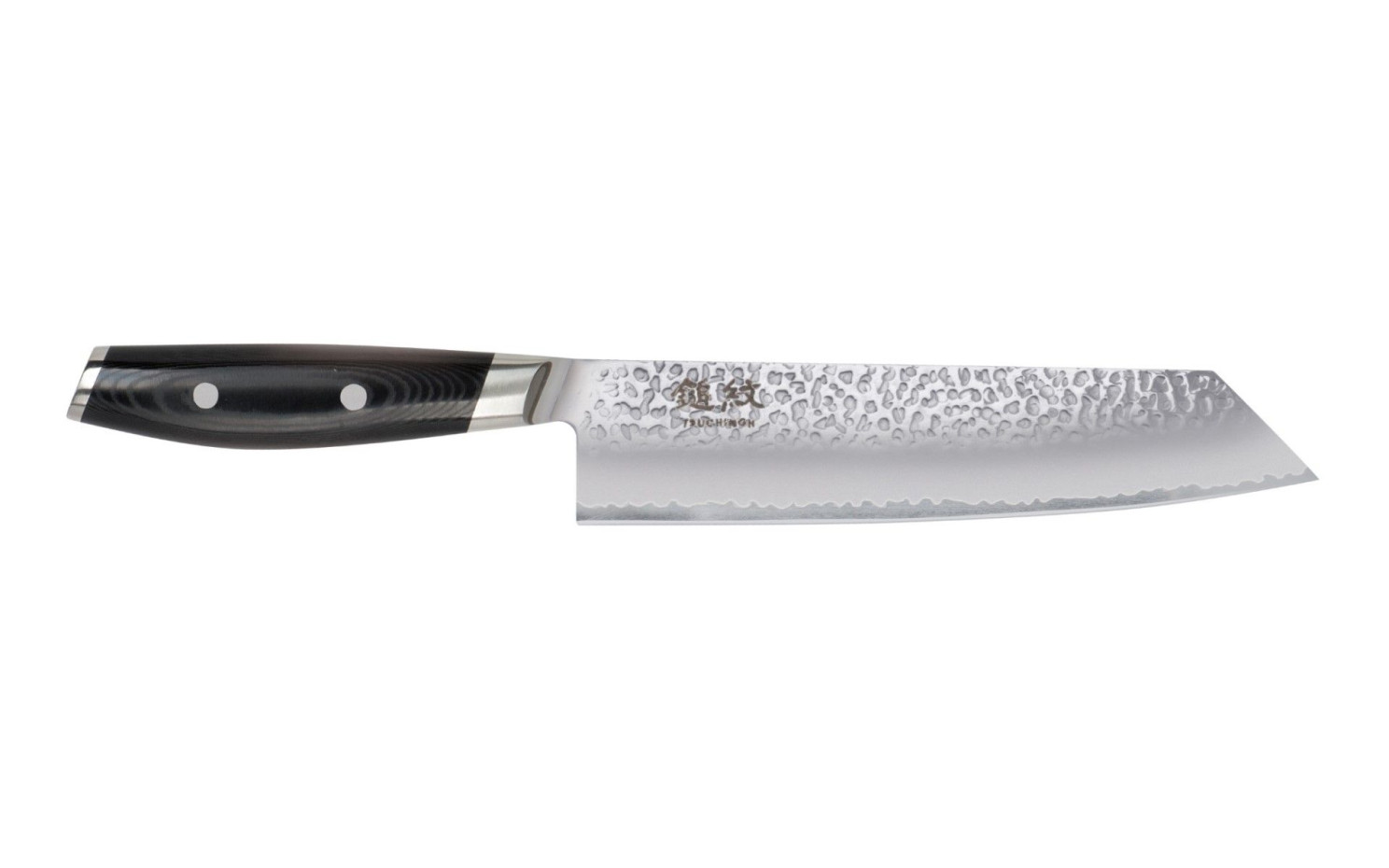
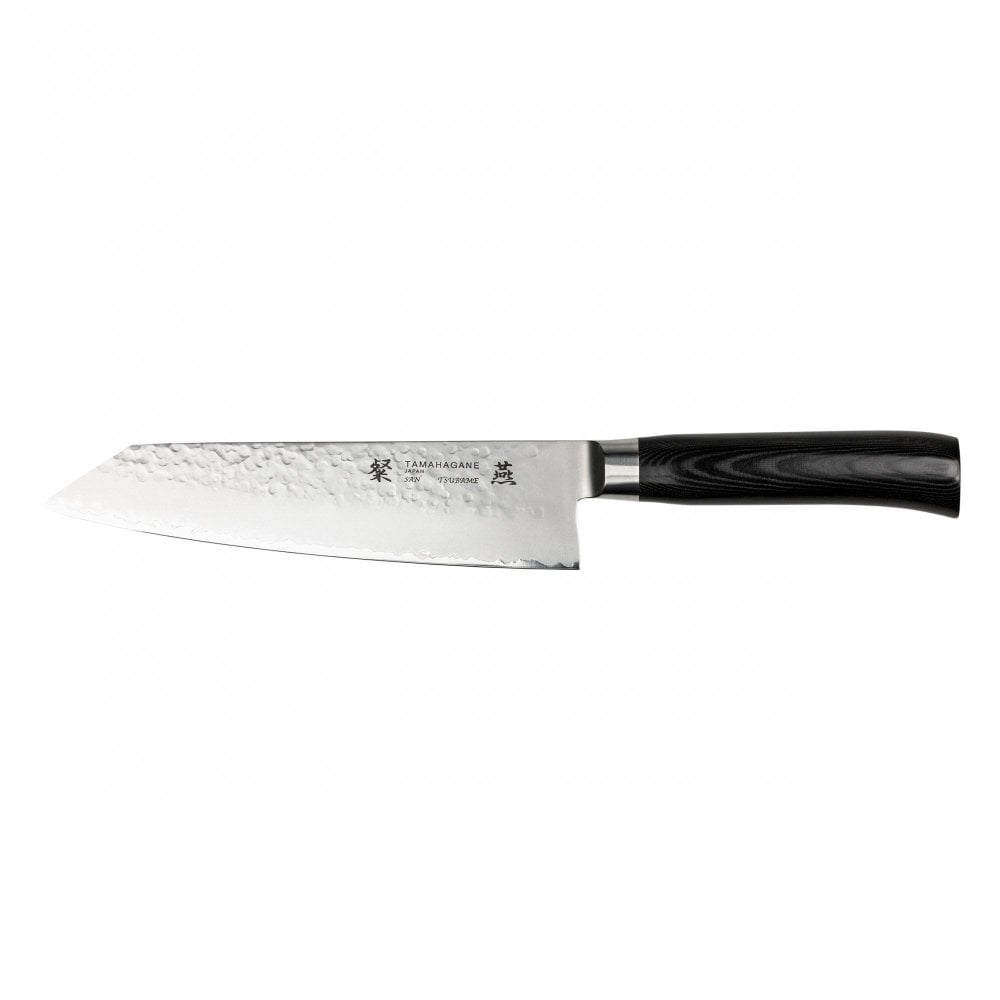
Searching for a knife that unites featherlight handling, precision, and Japanese design purity? The TOJIRO REPPU SG2 series exemplifies this fusion.
These knives are crafted from powdered SG2 steel with a core hardness of 62–63 HRC, delivering exceptional edge retention, durability, and ease of maintenance. The Kiritsuke Gyuto 210 mm features a San Mai structure — a layered steel composition with a robust SG2 core encased in stainless outer layers, offering the perfect balance of strength and finesse.
Its Japanese teak handle ensures ergonomic grip and lightness, while the signature Kiritsuke blade shape — with a slightly rounded belly and pointed tip — allows for versatile and precise cutting: from proteins to delicate vegetables.
What sets TOJIRO apart is its unique manufacturing approach. In Japan, a so-called “factory-made knife” often implies a blend: the blade is initially stamped and pressed, but key finishing steps such as thinning, polishing, handle shaping, and final sharpening are done by hand. This hybrid process upholds both efficiency and craftsmanship.
While TOJIRO frequently uses VG-10 steel for ease of sharpening, it also produces models in other premium alloys.
Every knife features a built-in NFC chip for authenticity verification and access to a digital certificate. And if you're in Japan, don’t miss the opportunity to visit TOJIRO’s workshop in Niigata, where guided tours include the forge and a beautifully curated showroom.
In essence, TOJIRO REPPU SG2 stands for cutting-edge technology meets Japanese minimalism — precision in weightlessness.
Care and Maintenance of Japanese Knives
✅ Proper Knife Care
Always hand wash the knife with warm water and dry it immediately with a soft cloth to maintain sharpness and quality.
To keep the edge precise, water stones are recommended for sharpening, while ceramic honing rods help refine the blade during regular use.
Store the knife in a safe place, avoiding contact with other kitchen utensils that could damage the edge.
Use wooden, plastic, or rubber cutting boards to protect the blade and extend its lifespan.
⚠️ Special Note for Traditional Japanese Steels
Japanese knives made from high-carbon steel require extra care to prevent oxidation and rust.
After each use, thoroughly clean the blade with warm water and immediately dry it completely with a soft cloth.
Applying a thin layer of mineral or camellia oil occasionally can further protect the blade from corrosion.
Knives should be stored in a dry place, avoiding prolonged exposure to moisture or contact with aggressive cleaning agents.
? Improper Use
Do not cut on hard surfaces like glass, ceramics, steel, metal tables, or baking trays.
Avoid cutting bones or frozen ingredients, as this can damage the blade edge.
Do not wash the knife in a dishwasher—chemicals and high temperatures can negatively impact the blade and handle.
A Japanese knife is a precision tool, designed for specific culinary tasks. Do not use it for inappropriate activities like chopping bones, opening cans, or handling non-food materials.
Send request