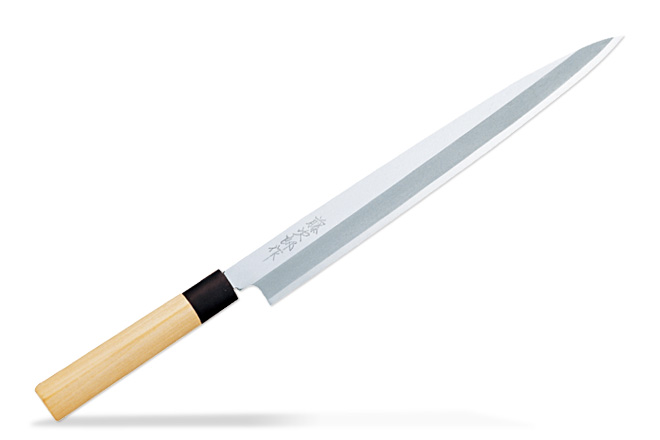
Tojiro Shirogami – Traditional Knife Series for True Sushi Masters
The Tojiro Shirogami series is crafted to meet the standards of every true sushi master. Each knife is hand-forged and sharpened using time-honored techniques that have shaped Japanese blade-making culture for centuries.
Deba – A Robust Knife for Fish and Poultry
Deba is a knife designed for filleting and processing fish. It features a thicker blade and single-bevel grind, ensuring durability. In addition to filleting, it can be used for cutting through fish bones and smaller poultry. The 165 mm blade length is considered ideal for Deba knives and suits most fish types commonly prepared in our region.
Shirogami 1 – Steel for Supreme Sharpness
This knife is made from Shirogami 1, also known as white steel. It is the most popular choice for traditional Japanese knives due to its ability to achieve exceptional sharpness, reminiscent of the legendary Tamahagane steel. The blade is laminated with hard and soft layers and ground on one side only – a hallmark of authentic Japanese craftsmanship. As such, it is suitable exclusively for right-handed users.
Magnolia Handle – Functional Elegance
The handle has a traditional shape, made from magnolia wood with a black resin collar. It is designed to feel comfortable in the hand of right-handed users, while the natural wood texture prevents slipping, even when hands are wet or stained during sushi preparation.
Care and Maintenance of Japanese Knives
✅ Proper Knife Care
Always hand wash the knife with warm water and dry it immediately with a soft cloth to maintain sharpness and quality.
To keep the edge precise, water stones are recommended for sharpening, while ceramic honing rods help refine the blade during regular use.
Store the knife in a safe place, avoiding contact with other kitchen utensils that could damage the edge.
Use wooden, plastic, or rubber cutting boards to protect the blade and extend its lifespan.
⚠️ Special Note for Traditional Japanese Steels
Japanese knives made from high-carbon steel require extra care to prevent oxidation and rust.
After each use, thoroughly clean the blade with warm water and immediately dry it completely with a soft cloth.
Applying a thin layer of mineral or camellia oil occasionally can further protect the blade from corrosion.
Knives should be stored in a dry place, avoiding prolonged exposure to moisture or contact with aggressive cleaning agents.
? Improper Use
Do not cut on hard surfaces like glass, ceramics, steel, metal tables, or baking trays.
Avoid cutting bones or frozen ingredients, as this can damage the blade edge.
Do not wash the knife in a dishwasher—chemicals and high temperatures can negatively impact the blade and handle.
A Japanese knife is a precision tool, designed for specific culinary tasks. Do not use it for inappropriate activities like chopping bones, opening cans, or handling non-food materials.
Send request