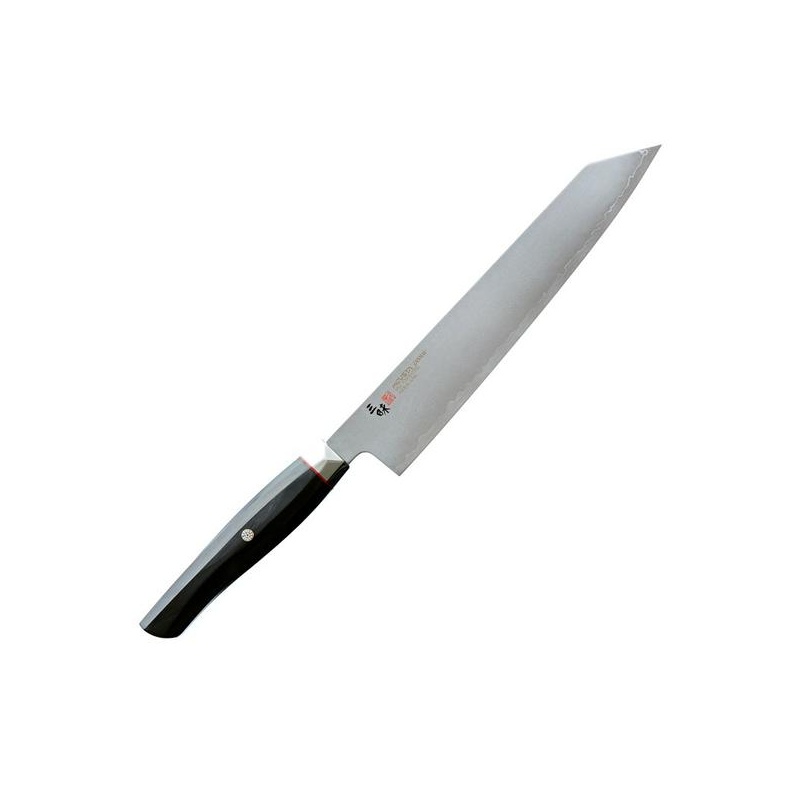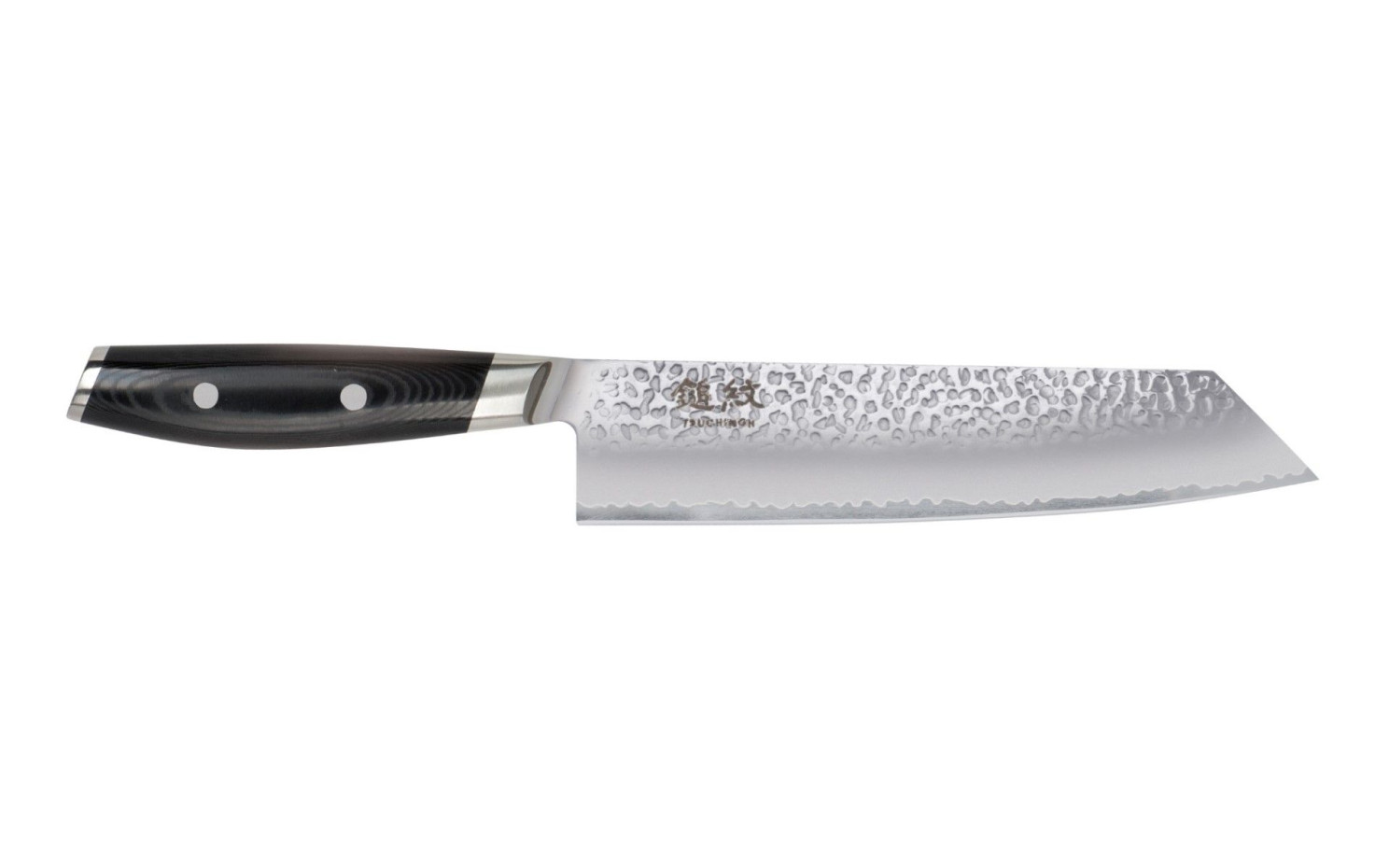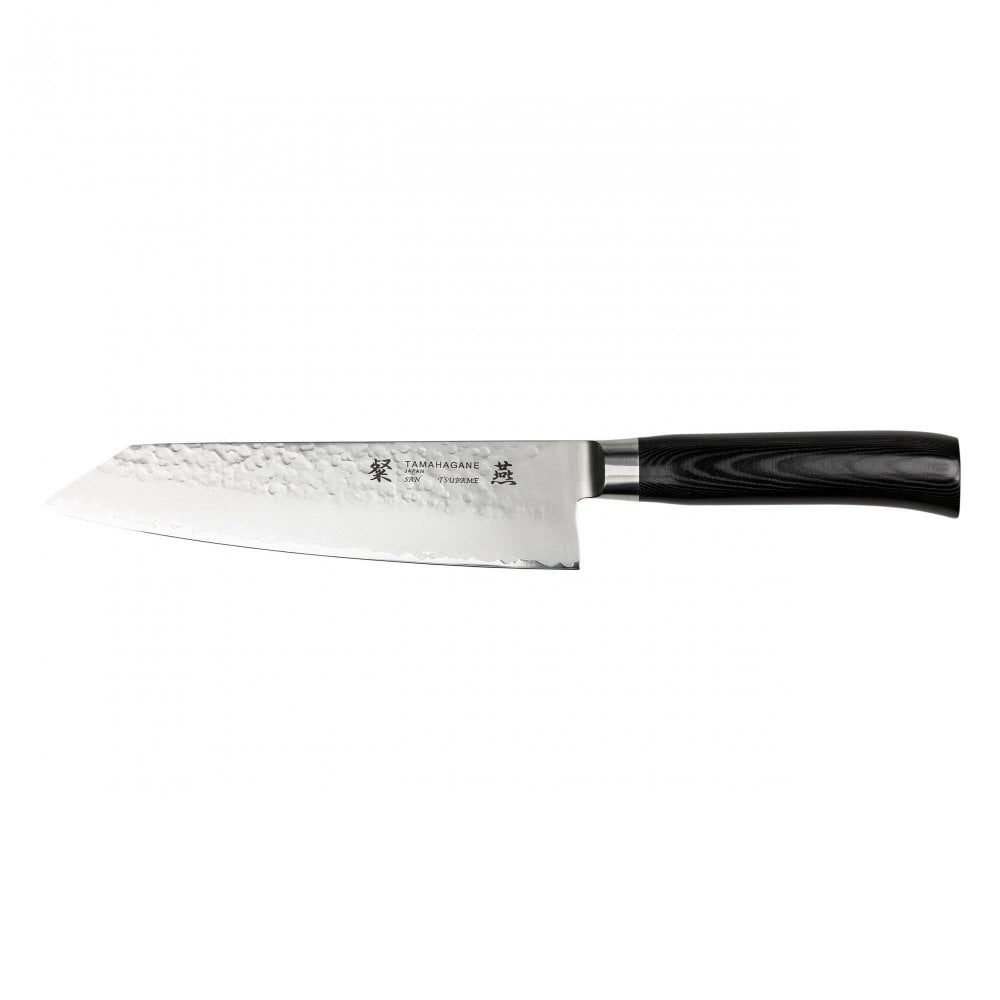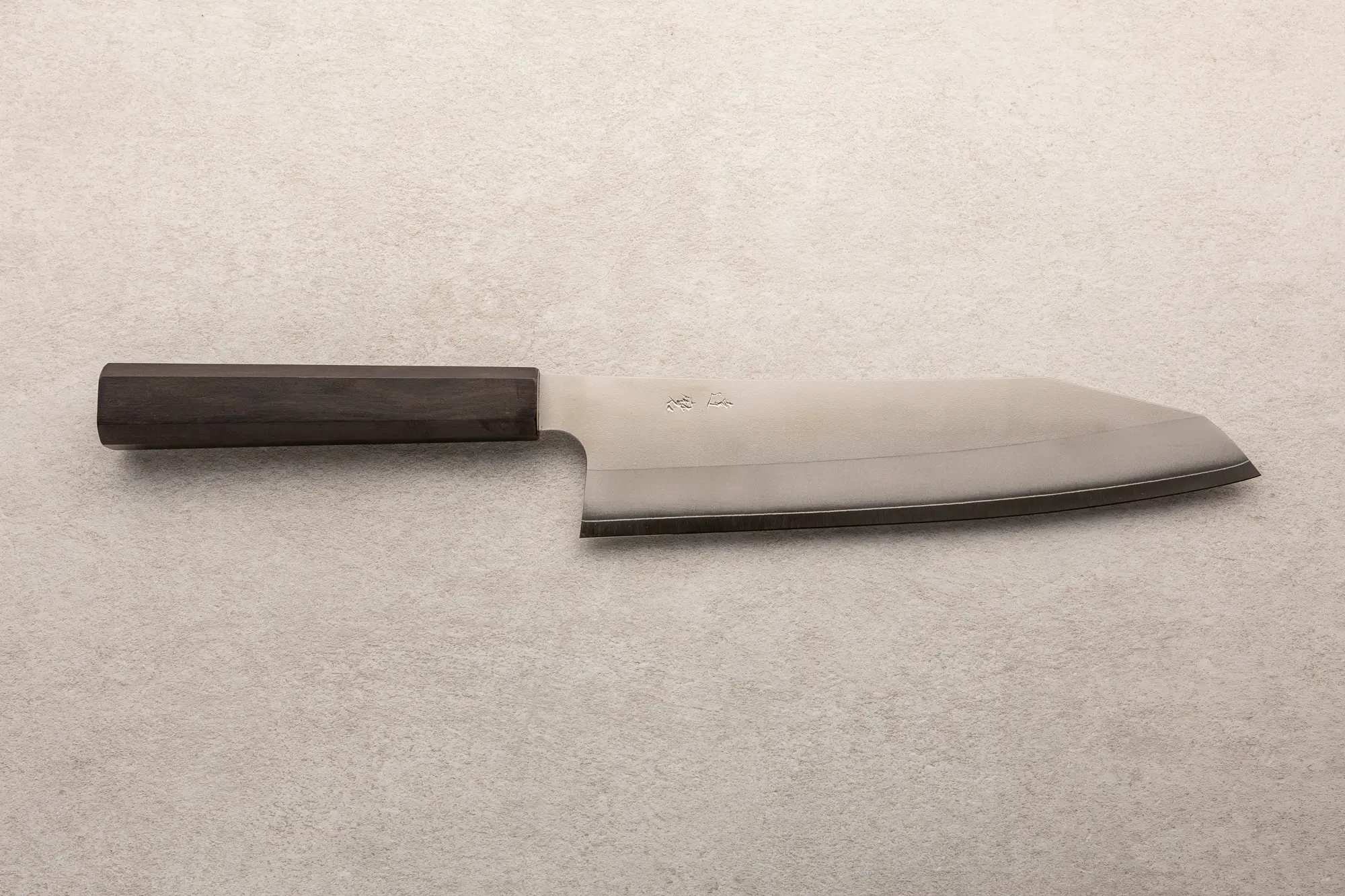
Daruma Hamono Kiritsuke 210 mm — Japanese Craftsmanship at Santoku Montenegro!
Discover Daruma Hamono, an independent Japanese knife brand based in Aomori Prefecture. The brand’s story began in Tokyo’s famous Kappabashi district, one of Japan’s best-known destinations for kitchenware and kitchen knives.
From 2021 to 2023, the founder worked in Kappabashi, gaining hands-on experience in knife retail, sharpening, and conversations with professional chefs and home cooks. These experiences helped shape his vision of the ideal kitchen knife. In 2023, he began training at the respected Nigara Hamono workshop in Aomori, where he continued refining his skills for two years. At the beginning of 2025, he launched his own brand, Daruma Hamono.
The name Daruma (達磨) is associated with Japanese characters carrying meanings related to reaching a goal and refinement. This philosophy reflects the brand’s commitment to precision, careful sharpening, and the continuous improvement of every detail.
The Kiritsuke is instantly recognisable by its distinctive angled tip, often referred to as a reverse tanto. Its elongated blade and relatively straight cutting edge offer excellent control and precision.
Combining the practicality of a Japanese kitchen knife with a striking, sword-inspired profile, the Kiritsuke is similar in purpose to a Gyuto. It is suitable for slicing boneless meat and fish, chopping vegetables, mincing ingredients, and carrying out detailed food preparation.
The 210 mm blade offers a useful balance of cutting length and manoeuvrability, making it suitable for both home kitchens and professional use.
Traditional Kiritsuke knives are often single-bevel and require a more specialised technique. Modern double-bevel versions are more versatile for a wider range of everyday kitchen tasks.
This model features Ginsan steel, also known as Silver 3, a high-quality Japanese stainless steel valued for its balance of corrosion resistance, sharpness and ease of sharpening.
Its fine, uniform structure supports excellent edge sharpness and very clean cutting performance. Ginsan is also relatively easy to sharpen, making it a popular choice among professional chefs and enthusiasts who appreciate the cutting feel of Japanese knives but prefer easier maintenance than many traditional carbon steels require.
Although Ginsan is stainless steel, proper care is still recommended: wash the knife after use, dry it immediately, and store it in a dry place.
Key features:
Brand: Daruma Hamono
Knife type: Kiritsuke
Blade length: 210 mm
Steel: Ginsan (Silver 3)
Best suited for: boneless meat and fish, vegetables, and precise food preparation
Highlights: distinctive Kiritsuke tip, excellent sharpness and clean cutting performance
Daruma Hamono Kiritsuke 210 mm — Japanese precision, quality Ginsan steel, and dedication to every detail.
Available at Santoku Montenegro!
✅ Proper Maintenance
Hand-wash the knife with warm water, then dry it with a soft cloth to preserve sharpness and material quality.
For long-lasting precision, use whetstones, while ceramic honing rods are excellent for fine edge adjustments during use.
Always store the knife properly to avoid contact with other utensils and potential damage.
It is recommended to use cutting boards made of wood, plastic, or rubber, as they are gentler on the blade and prolong its lifespan.
⚠️ Special Note for Traditional Japanese Steels
Japanese knives with high carbon content require special care to prevent oxidation and rust.
After each use, thoroughly wash with warm water and immediately dry with a soft cloth.
It is advisable to occasionally apply a thin layer of mineral or camellia oil on the blade for additional protection against corrosion.
Store knives in a dry place, avoiding prolonged exposure to moisture or aggressive cleaning agents.
? What to Avoid
Do not use the knife on hard surfaces such as glass, ceramics, steel, metal tables, or baking trays.
Do not cut bones or frozen foods, as this can damage the knife edge.
Do not wash the knife in a dishwasher—chemicals and high temperatures can compromise the integrity of both blade and handle.
A Japanese knife is a precision tool designed for specific culinary tasks. Do not use it for improper activities such as cutting bones, opening cans, or processing hard materials.
Send request