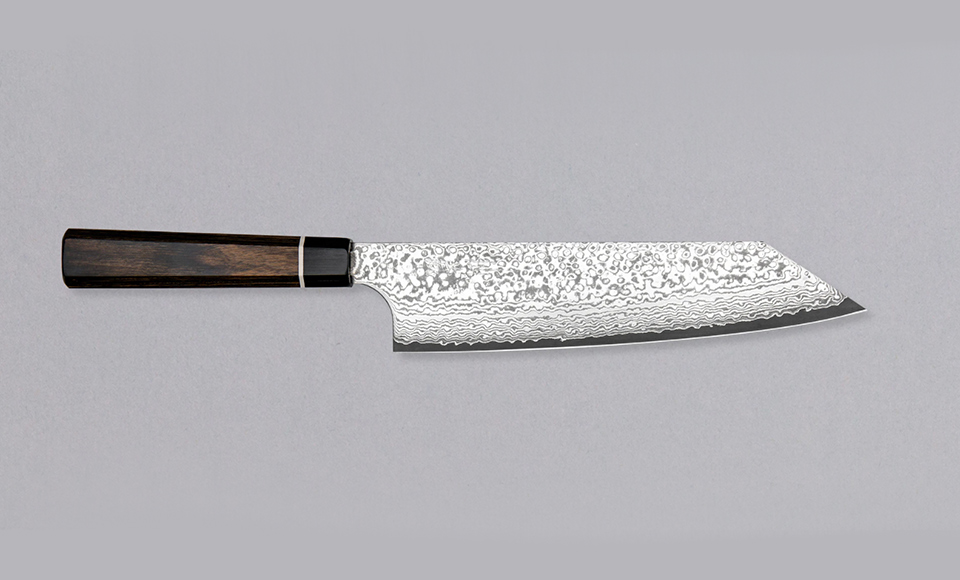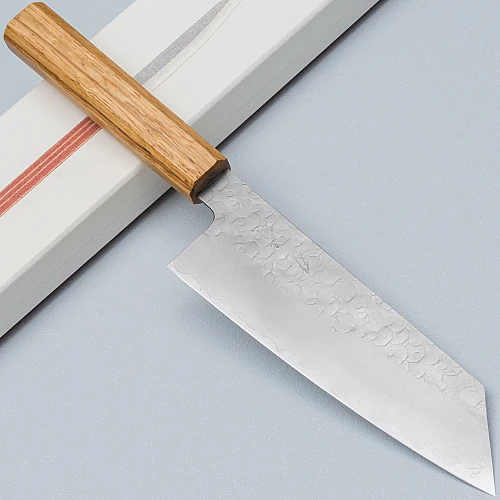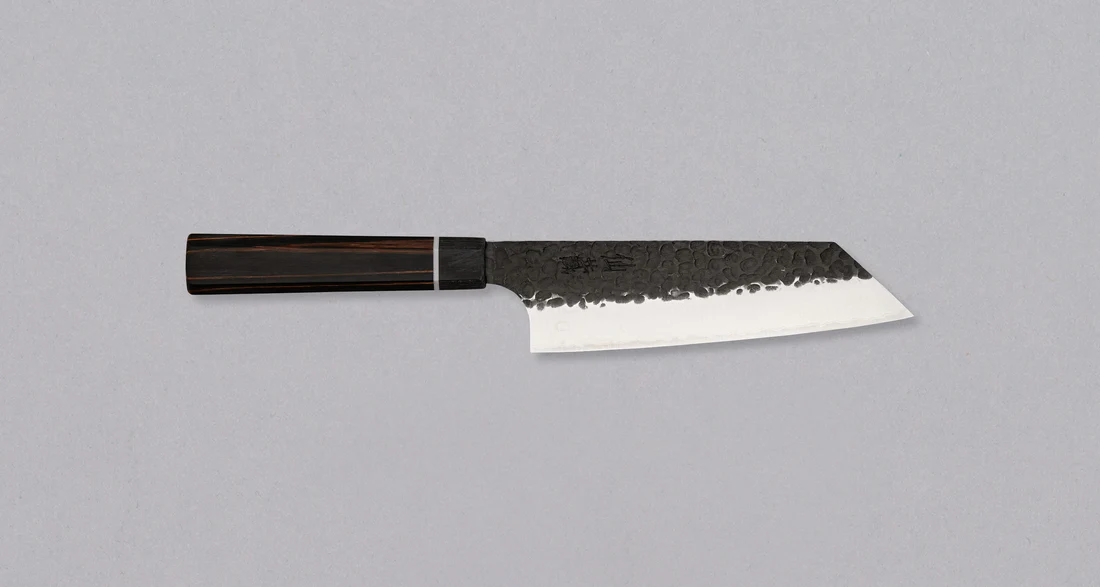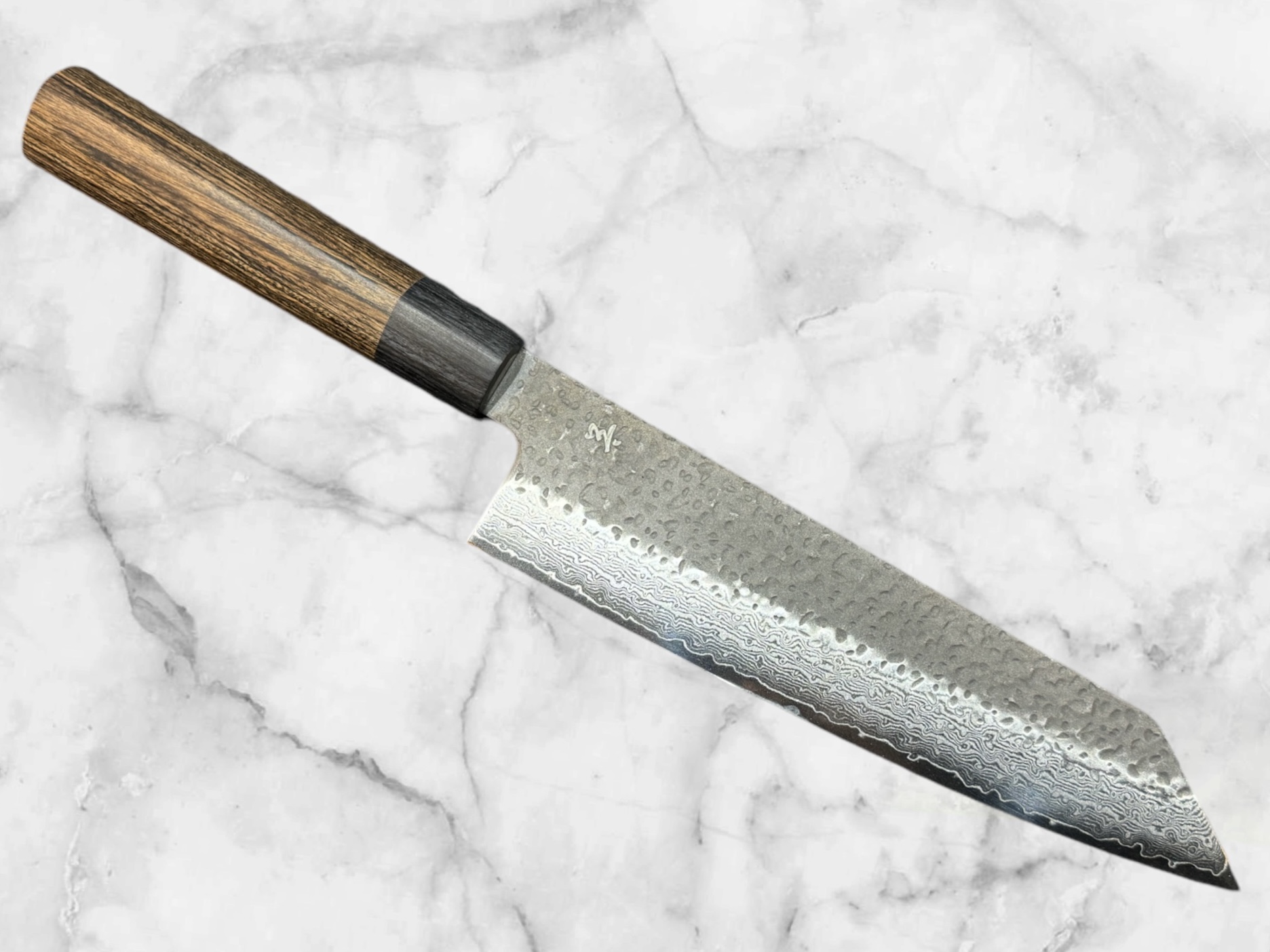
Shizu Hamono GEN Bunka 190 mm — Back at Santoku Montenegro!
We are pleased to welcome Shizu Hamono back to the Santoku Montenegro collection, bringing together Japanese tradition, quality craftsmanship, and functional design.
The GEN Bunka 190 mm is a versatile Japanese kitchen knife recognised by its distinctive K-tip profile, created by the angled transition between the blade’s spine and its pointed tip. This design gives the knife a unique appearance while allowing precise work with the tip.
Bunka is an excellent choice for a wide range of everyday kitchen tasks. It is well suited to chopping and slicing vegetables, cutting boneless meat and fish, and performing detailed work that benefits from excellent control. Its relatively flat cutting section works well for chopping on a board, while the angular tip is useful for precise cuts and finer preparation.
With a 190 mm blade, this knife offers a practical balance of cutting length, manoeuvrability and versatility, making it a strong choice for cooks looking for one Japanese knife capable of handling many kitchen tasks.
The blade is made from VG10 stainless steel, valued for its ability to achieve excellent sharpness and precise cutting performance. The GEN series combines understated styling with everyday practicality and Japanese knife-making character.
Key features:
Brand: Shizu Hamono
Series: GEN
Knife type: Bunka
Blade length: 190 mm
Steel: VG10 stainless steel
Best suited for: vegetables, boneless meat and fish, precision cutting, and everyday food preparation
Shizu Hamono GEN Bunka 190 mm — Japanese precision, a distinctive K-tip profile, and versatility in every cut.
Available at Santoku Montenegro!
✅ Proper Maintenance
Hand wash the knife with warm water and dry it immediately with a soft cloth to preserve its sharpness and material integrity.
For long-term precision, use whetstones for sharpening, while ceramic honing rods are excellent for fine edge adjustment during use.
Always store the knife properly to avoid contact with other kitchen tools and potential damage.
Use wooden, plastic, or rubber cutting boards, which are gentler on the edge and help extend the blade's lifespan.
⚠️ Special Note on Traditional Japanese Steels
Japanese knives with high-carbon steel blades require special care to prevent oxidation and rust formation.
After each use, wash thoroughly with warm water and dry immediately with a soft cloth.
Occasionally apply a thin layer of mineral or camellia oil to the blade for added corrosion protection.
Store knives in a dry place, avoiding prolonged exposure to moisture or contact with aggressive cleaning agents.
? What to Avoid
Do not use the knife on hard surfaces such as glass, ceramics, steel, metal tables, or baking trays.
Do not cut bones or frozen ingredients, as this can damage the edge.
Do not wash the knife in a dishwasher — chemicals and high temperatures can compromise the blade and handle.
A Japanese knife is a precision instrument designed for specific culinary tasks. Do not use it for unsuitable activities such as cutting bones, opening cans, or working with hard materials.
Send request