Masakage Yuki – The Elegance of Snow in a Perfect Knife
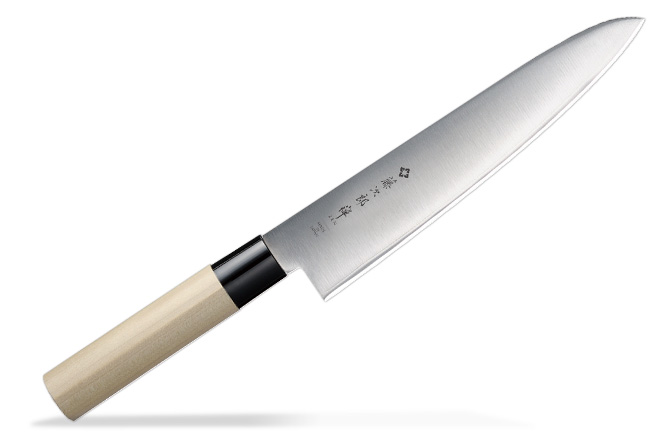
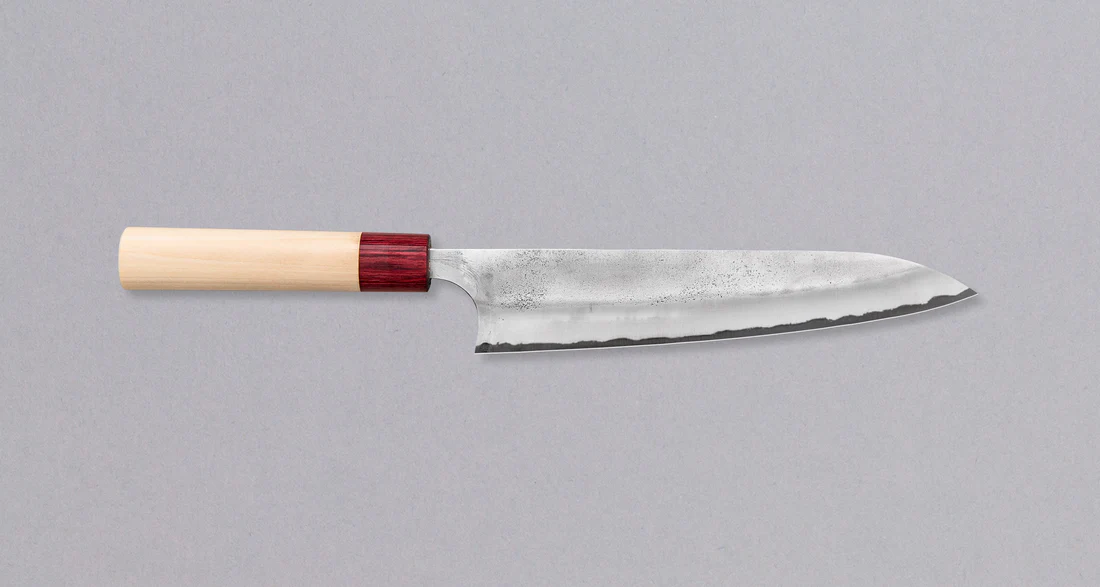
The Masakage Yuki collection, crafted by master blacksmith Yoshimi Kato, draws inspiration from winter landscapes. Its delicately textured blade and bright magnolia wood handle together evoke the essence of snow-covered Japanese scenery. The combination of a high-carbon steel core and stainless outer layers ensures a balance of exceptional beauty and superior performance.
Gyuto – Versatility in Japanese Chef Knives
Gyuto is the Japanese equivalent of traditional European chef knives. The name "Gyuto" translates to "beef sword," highlighting its precision in meat cutting. With a 210 mm length, it allows for effortless vegetable chopping and slicing larger cuts of meat. Due to its elongated blade, this knife is recommended for experienced chefs or those accustomed to using longer blades.
Distinctive Nashiji Finish
The blade features a Nashiji finish, meaning "Asian pear skin." This slightly rough, matte texture serves a dual purpose: it enhances the knife’s refined aesthetics while reducing food adhesion, improving efficiency while cutting.
Shirogami #2 Steel – A Blend of Precision and Durability
The knife’s core is made from Shirogami #2 (White 2) steel, wrapped in two layers of stainless steel that protect the spine. Hardened to 62–63 HRC, it guarantees exceptional sharpness and easy sharpening. This combination brings the best of both worlds—on one hand, resistance to corrosion and easy maintenance, and on the other, razor-sharp precision, a silky edge, and outstanding cutting performance.
Over time, the blade will develop a slight patina along the shinogi line, where the steel layers meet. Despite its protective outer layers, Masakage Yuki Gyuto requires careful maintenance—it must be wiped thoroughly after each use and occasionally oiled to preserve its long-term durability and functionality.
Care and Maintenance of Japanese Knives
✅ Proper Knife Care
Always hand wash the knife with warm water and dry it immediately with a soft cloth to maintain sharpness and quality.
To keep the edge precise, water stones are recommended for sharpening, while ceramic honing rods help refine the blade during regular use.
Store the knife in a safe place, avoiding contact with other kitchen utensils that could damage the edge.
Use wooden, plastic, or rubber cutting boards to protect the blade and extend its lifespan.
⚠️ Special Note for Traditional Japanese Steels
Japanese knives made from high-carbon steel require extra care to prevent oxidation and rust.
After each use, thoroughly clean the blade with warm water and immediately dry it completely with a soft cloth.
Applying a thin layer of mineral or camellia oil occasionally can further protect the blade from corrosion.
Knives should be stored in a dry place, avoiding prolonged exposure to moisture or contact with aggressive cleaning agents.
? Improper Use
Do not cut on hard surfaces like glass, ceramics, steel, metal tables, or baking trays.
Avoid cutting bones or frozen ingredients, as this can damage the blade edge.
Do not wash the knife in a dishwasher—chemicals and high temperatures can negatively impact the blade and handle.
A Japanese knife is a precision tool, designed for specific culinary tasks. Do not use it for inappropriate activities like chopping bones, opening cans, or handling non-food materials.
Send request

.jpg)