Tamahagane Gyuto – The Perfect Balance of Precision, Durability, and Elegant Design
The Tamahagane Gyuto knife is crafted for universal kitchen use, covering a wide range of culinary tasks. It allows effortless vegetable chopping, slicing larger cuts of meat, and offers precision handling with its thin, tapered tip.
This is a durable knife, renowned for its long-lasting sharpness, easy maintenance, and excellent balance. Its sleek yet practical design makes it visually appealing, while users praise its maximum efficiency in cutting tasks. Whether you're a dedicated home cook or a professional chef, Tamahagane Gyuto delivers the ideal combination of precision, durability, and control in food preparation.
Blade Shape – Gyuto, Superior Versatility
The Gyuto knife is the Japanese equivalent of traditional Western chef knives, recognized as one of the most versatile blade shapes in modern kitchens. Designed to handle meat, fish, and vegetables, it ensures precise and effortless cutting.
Broad heel profile provides stability during board work, while
Thin, pointed tip allows delicate and precision slicing.
Slightly curved geometry makes it perfect for rocking motion cutting, enhancing work efficiency.
Ideal for chopping, slicing into cubes, julienne cuts, and handling larger meat portions.
Its optimal blade length (210 mm) makes it the perfect mid-sized kitchen knife, suitable for those seeking a reliable all-rounder. Recommended as a first kitchen knife purchase, its practical size allows easy handling for various cooking techniques.
Steel – VG-5, Built for Longevity
The VG-5 steel belongs to the V-Gold series of premium Japanese steels, known for exceptional corrosion resistance. Manufactured by Takefu Steel Ltd., VG-5 is engineered for high-performance cutting tools, ensuring superior edge retention.
Advantages of VG-5 steel:
✅ Exceptional hardness and durability
✅ Easy sharpening and maintenance
✅ High resistance to corrosion
✅ Unmatched sharpness and precision
VG-5 steel composition:
Carbon: 0.7–0.8%
Chromium: 13–15%
Molybdenum: 0.2–0.4%
Vanadium: 0.1–0.2%
Nickel: 0.25%
Copper: 0.25%
Lamination – Enhanced Flexibility and Protection
The VG-5 steel core is laminated with two outer layers of stainless steel SUS410, hardened to 28–32 HRC, enhancing structural flexibility and resistance to external factors.
Through the forging process, the three-layer structure is compressed from an initial 20 mm thickness down to 2 mm, ensuring a razor-thin blade with remarkable cutting precision. Tamahagane knives are famous for their long-lasting sharpness, and resharpening is effortless.
Finish – Refined Matte Texture
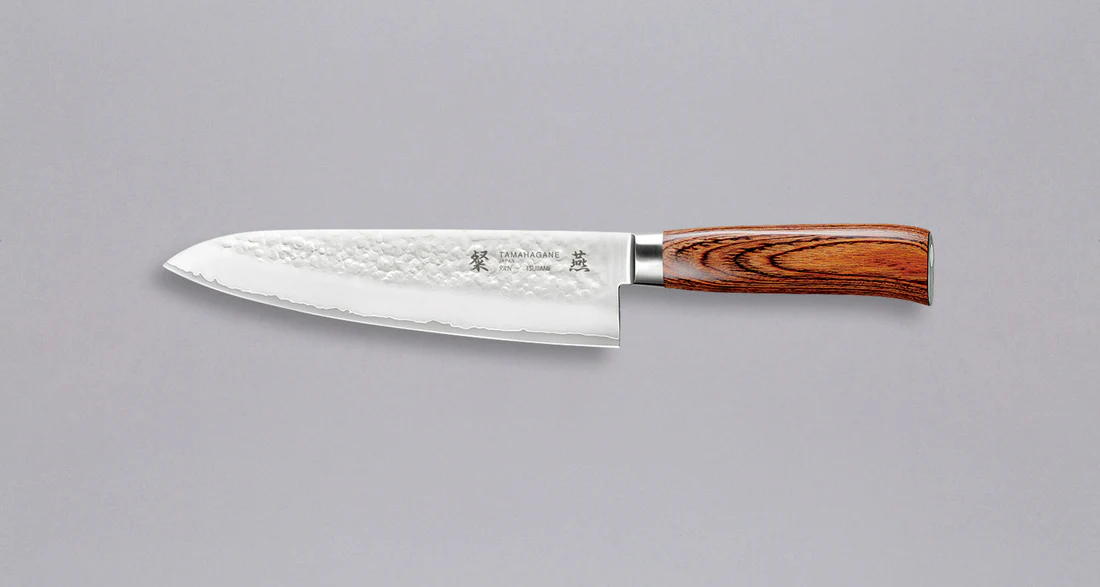
The blade features a subtly matte finish, accented with hammered markings, adding unique character to the knife. The Hagane and Jigane transition line, separating the hard and soft steel layers, forms a minimalist visual detail, enhancing the refined aesthetic.
Handle – Ergonomic Grip for Maximum Comfort
The handle of this knife is made from light brown layered wood (Pakka), valued for its durability and strength. It offers a firm grip, designed for both left- and right-handed users, making it particularly well-suited for chefs with larger hands who require a stable hold.
Outstanding Price-to-Quality Ratio
One of the greatest advantages of the Tamahagane Gyuto knife is its remarkable balance between price and performance. It delivers cutting-edge quality that rivals more expensive models, providing exceptional longevity and precision. User reviews consistently highlight its efficiency, easy sharpening, and long-lasting sharpness, making it an excellent investment for any serious cook.
About the Forge – Tradition from Niigata
Tamahagane knives originate from Tsubame-Sanjo, Niigata Prefecture in northern Japan—a region renowned for masterful steel craftsmanship. Here, traditional forging techniques are combined with modern innovations, resulting in world-class kitchen knives.
Care and Maintenance of Japanese Knives
✅ Proper Knife Care
Always hand wash the knife with warm water and dry it immediately with a soft cloth to maintain sharpness and quality.
To keep the edge precise, water stones are recommended for sharpening, while ceramic honing rods help refine the blade during regular use.
Store the knife in a safe place, avoiding contact with other kitchen utensils that could damage the edge.
Use wooden, plastic, or rubber cutting boards to protect the blade and extend its lifespan.
⚠️ Special Note for Traditional Japanese Steels
Japanese knives made from high-carbon steel require extra care to prevent oxidation and rust.
After each use, thoroughly clean the blade with warm water and immediately dry it completely with a soft cloth.
Applying a thin layer of mineral or camellia oil occasionally can further protect the blade from corrosion.
Knives should be stored in a dry place, avoiding prolonged exposure to moisture or contact with aggressive cleaning agents.
? Improper Use
Do not cut on hard surfaces like glass, ceramics, steel, metal tables, or baking trays.
Avoid cutting bones or frozen ingredients, as this can damage the blade edge.
Do not wash the knife in a dishwasher—chemicals and high temperatures can negatively impact the blade and handle.
A Japanese knife is a precision tool, designed for specific culinary tasks. Do not use it for inappropriate activities like chopping bones, opening cans, or handling non-food materials.
Send request