Description:
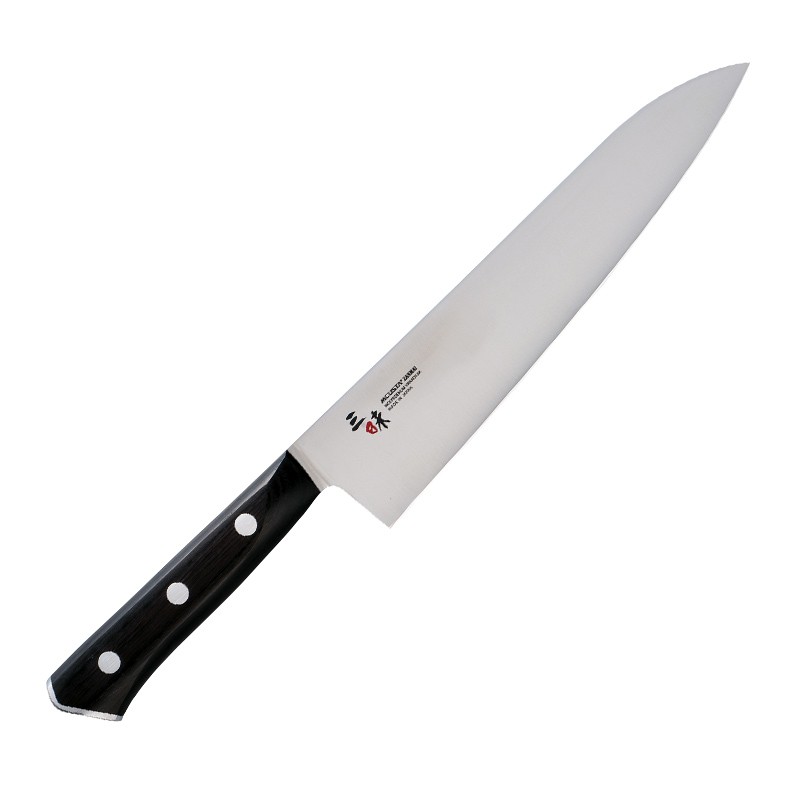
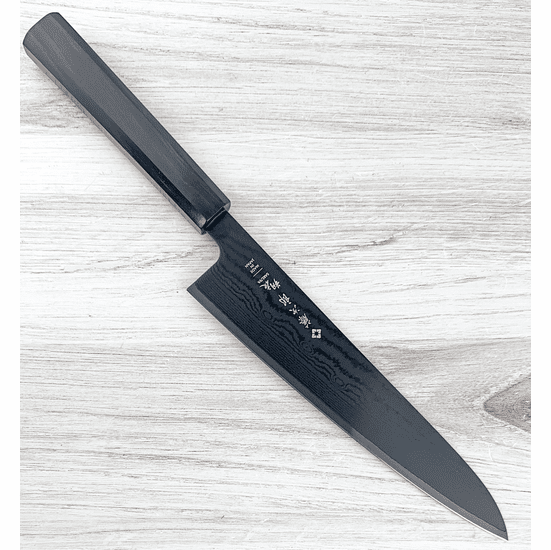
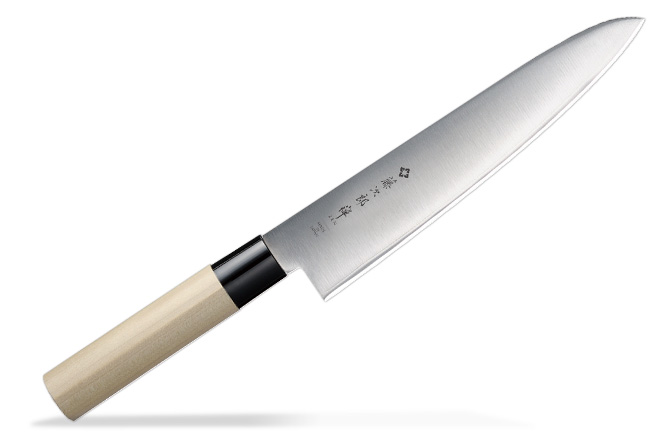
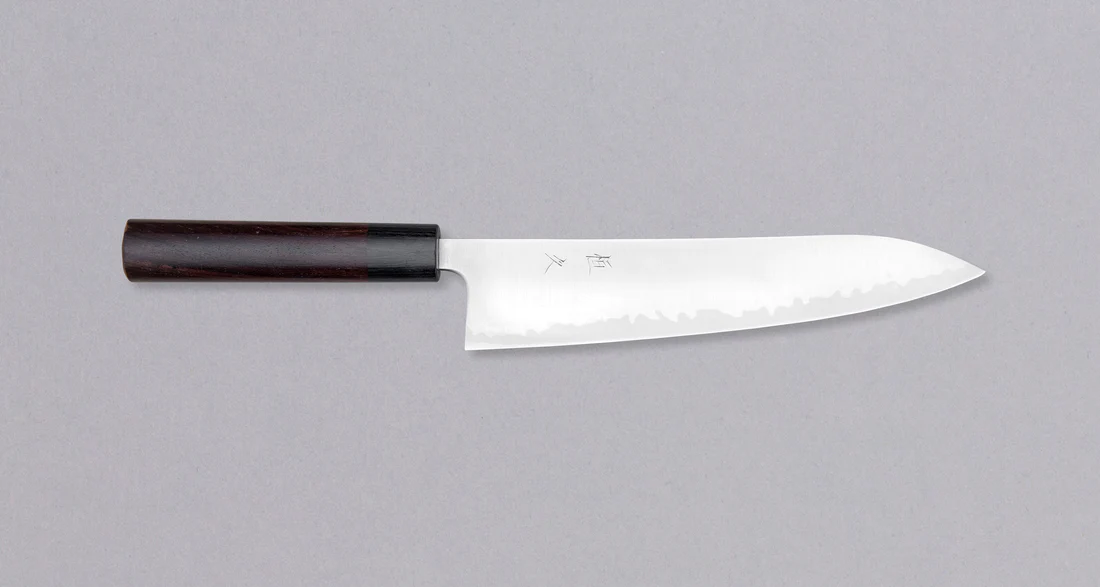
The Tsunehisa Gyuto AS Migaki 210 mm is a versatile Japanese kitchen knife suitable for preparing meat, fish, and vegetables. Despite its simple appearance, it features a core forged from Aogami Super steel — Japan’s finest traditional carbon steel, celebrated for its razor-sharp edge and long-lasting performance.
Blade Shape:
“Gyuto” means “beef sword.” Originally designed to cut large pieces of beef, it’s now a general-purpose chef’s knife in Japanese kitchens. The blade is double-beveled and suitable for both left- and right-handed users.
Steel:
Aogami Super contains 1.50% carbon and reaches around 63 HRC in hardness. Tungsten and chromium improve its wear resistance and lend it partial corrosion resistance. However, it's not stainless — it will develop a patina and may rust if left wet or exposed to acidic foods. Always dry thoroughly after use.
Cladding:
The hard Aogami Super core is laminated between two layers of softer stainless steel to increase flexibility and reduce brittleness.
Blade Geometry:
Symmetrical double bevel.
Finish:
Polished to a mirror-like shine.
Handle:
Traditional Japanese Wa-style handles are octagonal and made of rosewood. Comfortable for both left- and right-handed users.
Forge:
Tsunehisa knives are made in various renowned Japanese regions like Tosa, Seki, and Sakai. Each region brings its own unique materials and forging techniques.
Care and Maintenance of Japanese Knives
✅ Proper Knife Care
Always hand wash the knife with warm water and dry it immediately with a soft cloth to maintain sharpness and quality.
To keep the edge precise, water stones are recommended for sharpening, while ceramic honing rods help refine the blade during regular use.
Store the knife in a safe place, avoiding contact with other kitchen utensils that could damage the edge.
Use wooden, plastic, or rubber cutting boards to protect the blade and extend its lifespan.
⚠️ Special Note for Traditional Japanese Steels
Japanese knives made from high-carbon steel require extra care to prevent oxidation and rust.
After each use, thoroughly clean the blade with warm water and immediately dry it completely with a soft cloth.
Applying a thin layer of mineral or camellia oil occasionally can further protect the blade from corrosion.
Knives should be stored in a dry place, avoiding prolonged exposure to moisture or contact with aggressive cleaning agents.
? Improper Use
Do not cut on hard surfaces like glass, ceramics, steel, metal tables, or baking trays.
Avoid cutting bones or frozen ingredients, as this can damage the blade edge.
Do not wash the knife in a dishwasher—chemicals and high temperatures can negatively impact the blade and handle.
A Japanese knife is a precision tool, designed for specific culinary tasks. Do not use it for inappropriate activities like chopping bones, opening cans, or handling non-food materials.
Send request