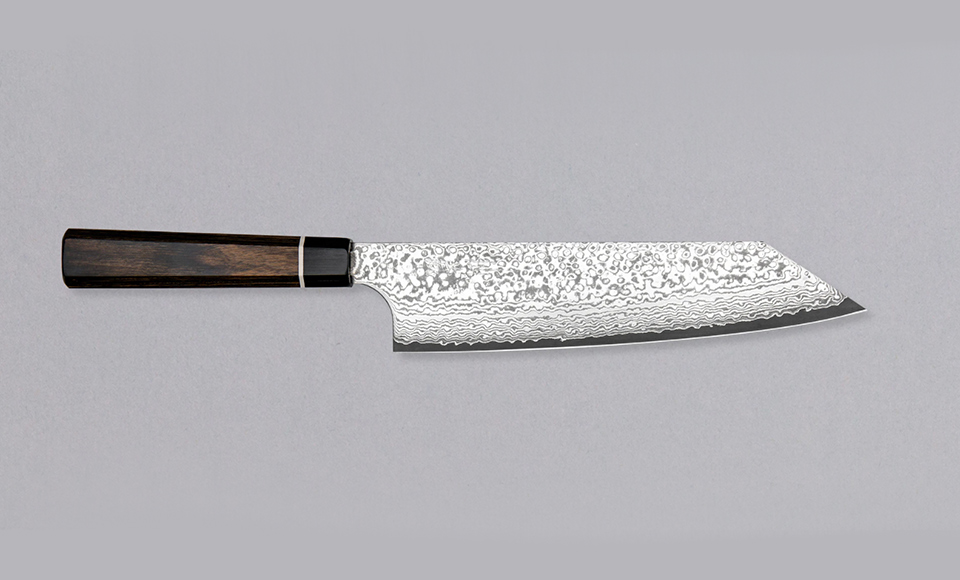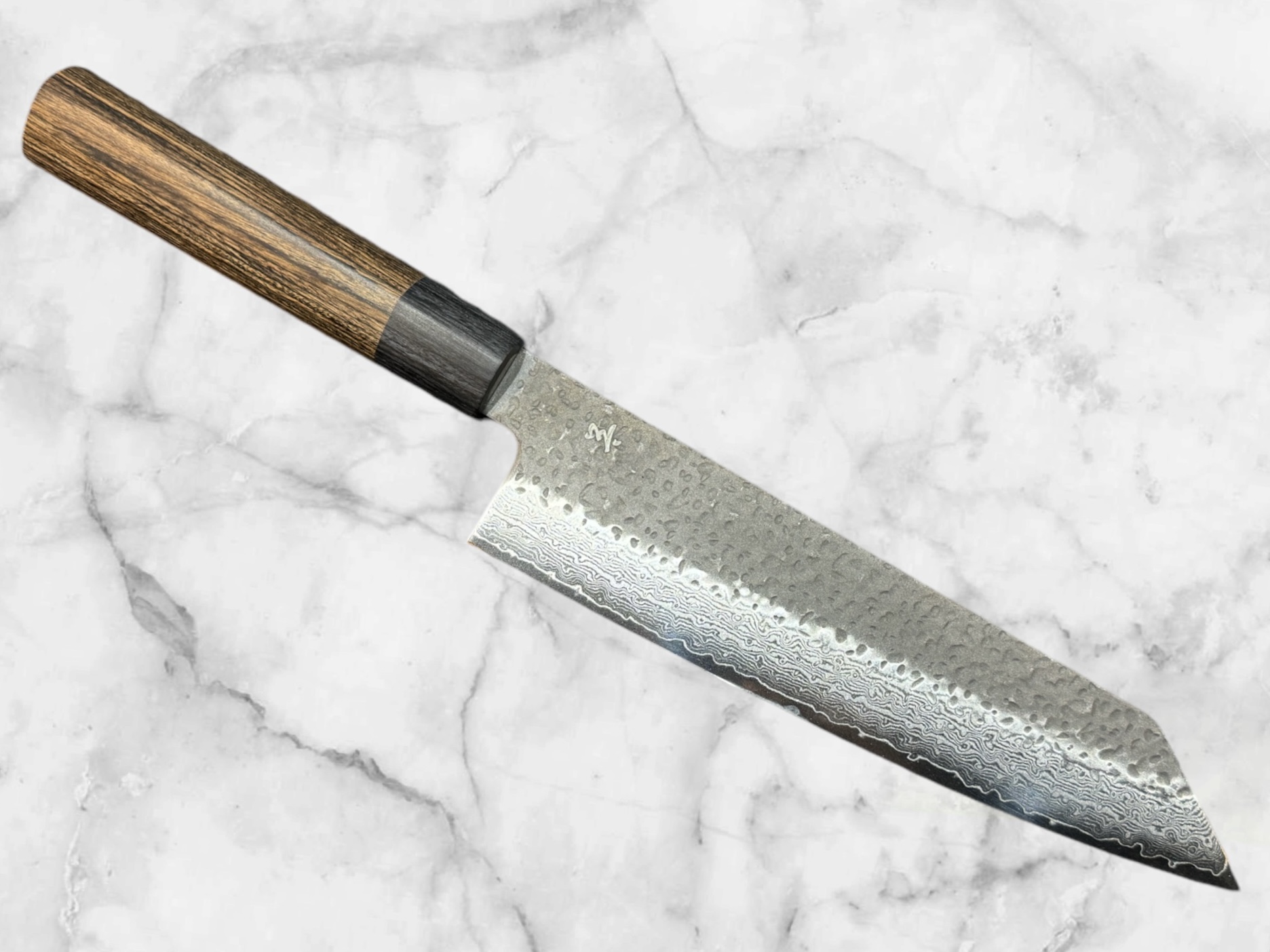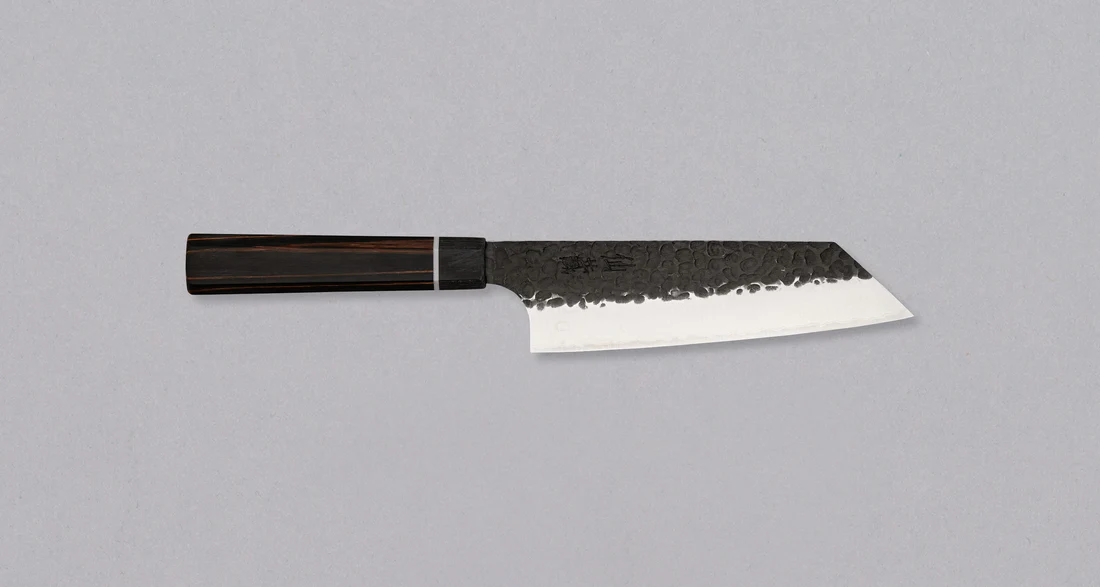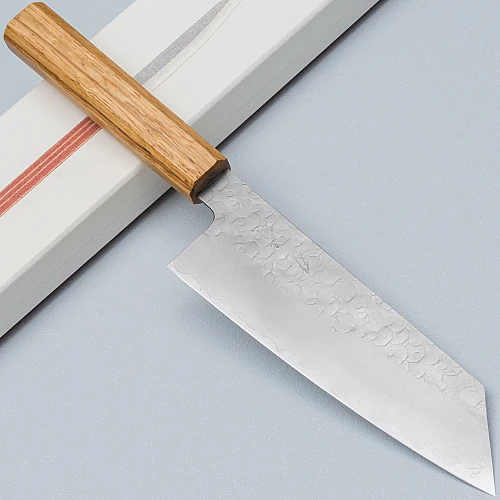
Founded in Sakai in 2019, HADO is a highly regarded Japanese workshop that combines traditional knife-making with contemporary aesthetics and meticulous craftsmanship. Working with respected blacksmiths such as Yoshikazu Tanaka and Shogo Yamatsuka, HADO focuses on balance, refined finishing and exceptional cutting performance.
Bunka — versatile and precise
The Bunka is a versatile Japanese knife suited to preparing meat, fish and vegetables. Its gently curved edge supports longer cuts, while the straighter rear section works well for chopping. The distinctive angular tip offers excellent visibility and control for detailed cutting and precision work.
SG2 — premium powder stainless steel
SG2 is a Japanese powder metallurgy stainless steel valued for its fine microstructure, sharpness and edge retention. With a hardness of approximately 62–64 HRC, it can maintain a sharp edge for extended periods while offering strong corrosion resistance for everyday use. Sharpening requires more care than with softer steels, and the blade should not be twisted or used to cut hard or frozen ingredients.
The name HADO means “the path of the blade,” reflecting the brand’s philosophy of bringing together Japanese tradition, practical performance and minimalist design.
Available from Santoku Montenegro.
✅ Proper Maintenance
Hand wash the knife with warm water and dry it immediately with a soft cloth to preserve its sharpness and material integrity.
For long-term precision, use whetstones for sharpening, while ceramic honing rods are excellent for fine edge adjustment during use.
Always store the knife properly to avoid contact with other kitchen tools and potential damage.
Use wooden, plastic, or rubber cutting boards, which are gentler on the edge and help extend the blade's lifespan.
⚠️ Special Note on Traditional Japanese Steels
Japanese knives with high-carbon steel blades require special care to prevent oxidation and rust formation.
After each use, wash thoroughly with warm water and dry immediately with a soft cloth.
Occasionally apply a thin layer of mineral or camellia oil to the blade for added corrosion protection.
Store knives in a dry place, avoiding prolonged exposure to moisture or contact with aggressive cleaning agents.
? What to Avoid
Do not use the knife on hard surfaces such as glass, ceramics, steel, metal tables, or baking trays.
Do not cut bones or frozen ingredients, as this can damage the edge.
Do not wash the knife in a dishwasher — chemicals and high temperatures can compromise the blade and handle.
A Japanese knife is a precision instrument designed for specific culinary tasks. Do not use it for unsuitable activities such as cutting bones, opening cans, or working with hard materials.
Send request